Warning Signs Your Tree Needs Help in Alpharetta, GA
Trees are great for shade, beauty, and privacy, but they can become problems when they're stressed, diseased, or weak. Spotting when a tree needs professional help can protect your home, family, and the tree itself. Not sure if a tree is healthy? A certified arborist can check it out and suggest the next steps, like tree pruning, cabling and bracing, or even tree removal.
The tree care industry is changing fast, with challenges like labor shortages and rising insurance costs. Still, people are more aware of the risks, so demand for professional tree services remains strong. For more on tree health, the International Society of Arboriculture and the Tree Care Industry Association offer great resources.
Why Early Tree Inspection Matters
Small Problems Can Grow Big
Trees don't just fail overnight. They often show signs like cracks, hollow spots, or dead limbs well before becoming hazards. Catching these early can save the tree with pruning or support. Ignoring them might lead to emergency work and property damage.
Safety First
Judging a tree by its looks isn't enough. Green leaves can hide root or trunk issues, and seemingly stable trees can fall in a storm. The National Park Service suggests proactive inspections to keep people and property safe.
Keeping Value Intact
Well-maintained trees boost curb appeal and property value, while neglected ones can damage roofs, sidewalks, and more. Treating tree checks as regular maintenance, not emergencies, can save money and headaches. If you spot issues, consider calling in a pro for fertilization or support to help extend the tree’s life.
Warning Signs of an Unhealthy Tree
Branches Breaking or Hanging
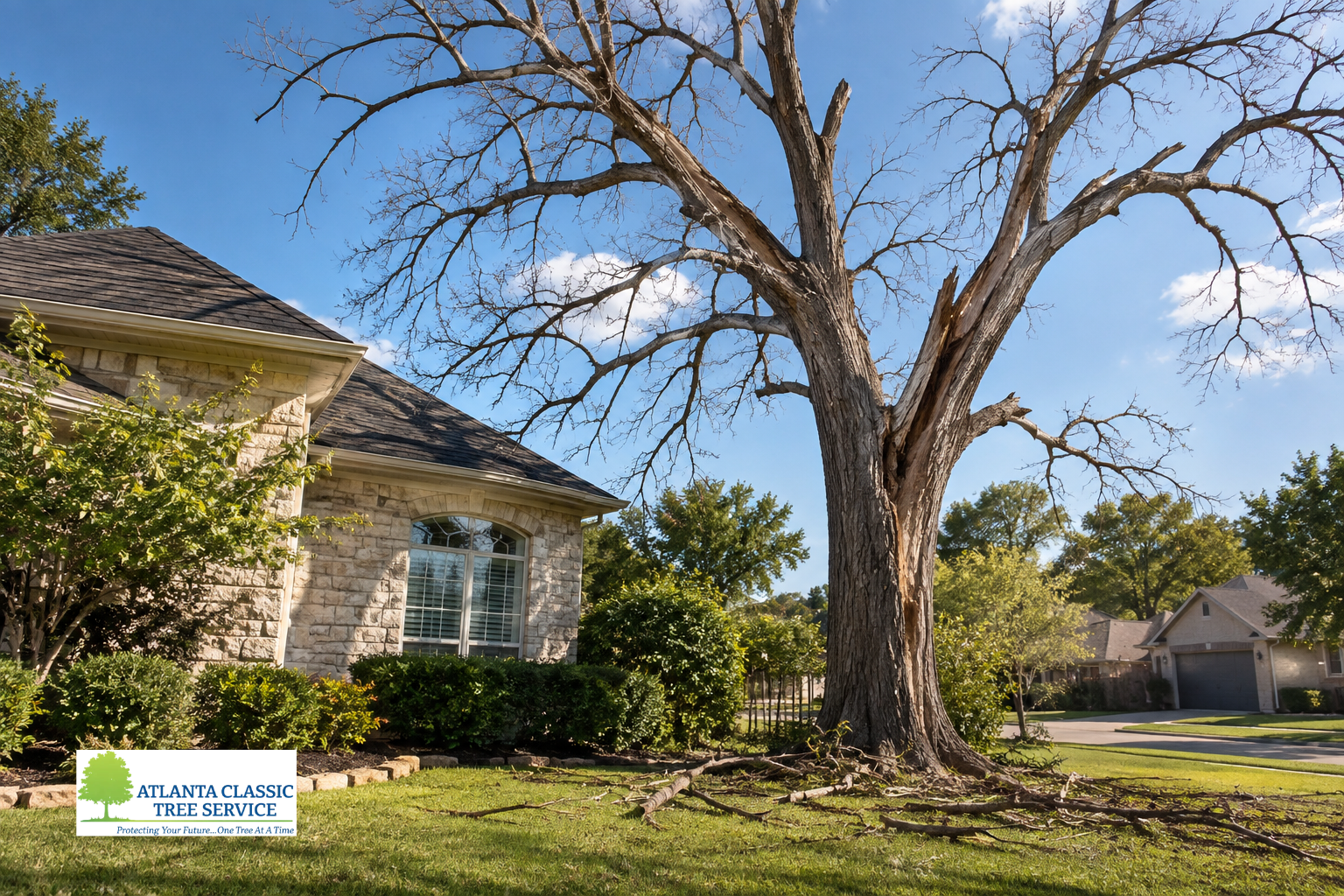
Dead branches signal disease, root stress, or insect activity. Hanging limbs are dangerous, as they can fall unexpectedly. If you see deadwood in the canopy, it’s time for a professional check-up.
Cracks in the Trunk
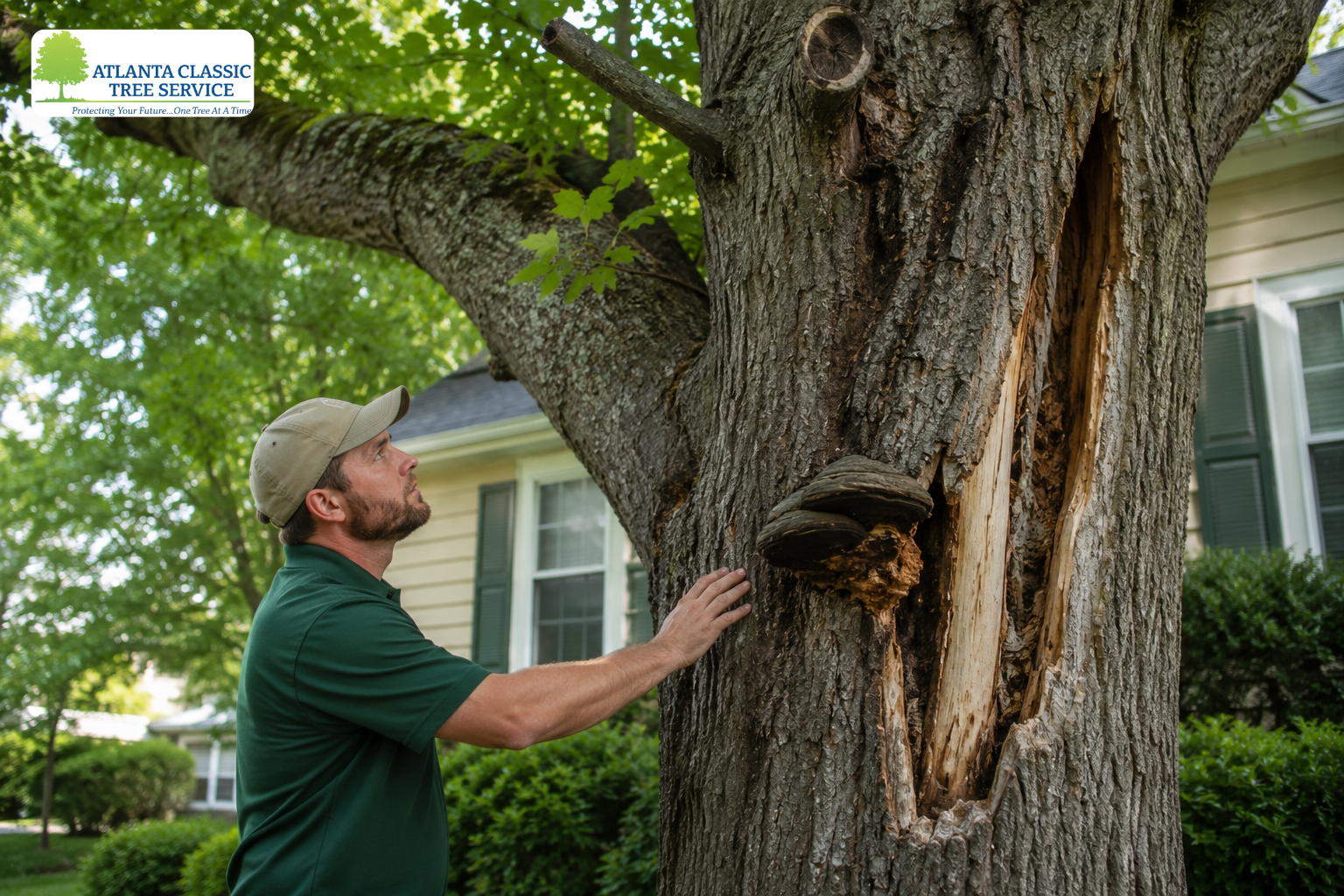
Cracks could mean the tree's under stress. Some are harmless, but deep splits might indicate serious issues. Arborists assess these to decide on the best action, whether it's stabilization or removal.
Fungal Growth and Decay
Fungus at the base is a big red flag. Mushrooms or hollow spots suggest decay that you might not see. Even if the canopy looks fine, the tree could be at risk.
Leaning and Exposed Roots
A sudden lean is a worry, especially with lifted roots. While some lean naturally, new or worsening leans might mean root failure. An example is a leaning oak in Alpharetta found to have internal decay, showing why timely action is key.
Tree Disease and Pest Problems
Discolored Leaves
Leaf color changes are often an early sign of trouble. Yellowing or browning could mean nutrient issues or disease. A thinning canopy might indicate the tree is using energy just to survive.
Bark Issues and Oozing Sap
Healthy bark shouldn’t look broken or wet. Cankers and peeling bark might mean disease or pests. Catching these changes early can help control the problem.
Insect Activity
Pests often target weak trees, and signs include small holes or sawdust. Once pests are in, they can worsen the tree's condition. The U.S. Department of Agriculture provides info on plant health and pest management.
Structural Signs of Risk
Weak Branch Unions
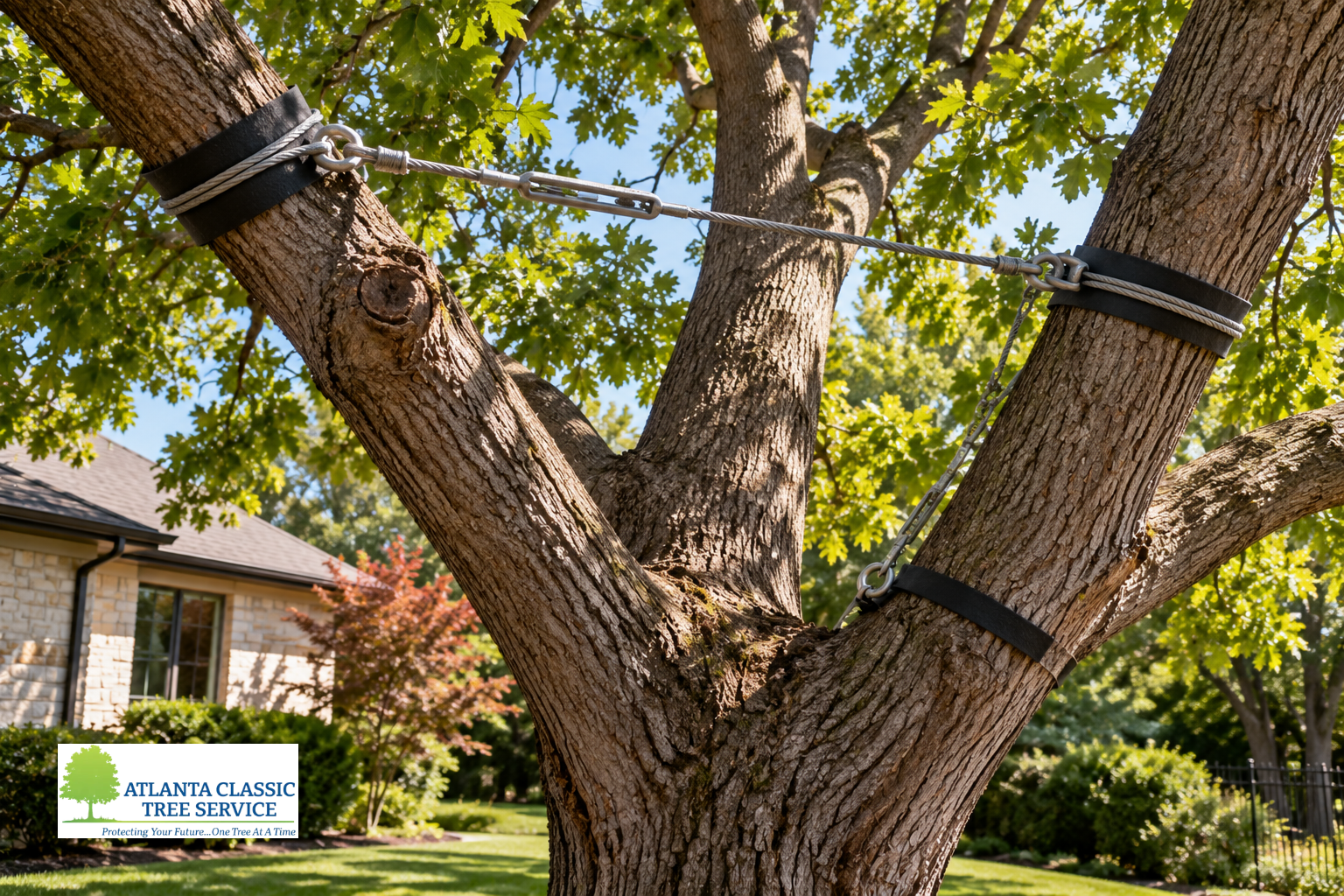
Not all risks are obvious. Weak branch attachments can split during storms. Pruning can help if defects are caught early enough.
Hollow Trunks
A hollow trunk doesn't always mean removal. Some trees handle decay well, but arborists check for how much sound wood is left to support the tree.
Root Damage
Roots are key for stability and nutrients. Construction can harm roots, leading to decline. Symptoms might show up above ground much later. For more, see our guide on how tree roots impact buildings.
Trees Too Close to Structures
Trees near homes or driveways can cause damage. If unsure about spacing, our guide to managing a tree too close to your home offers tips.
Certified Arborist Assessments
Visual Inspection
Arborists start with a visual check of the tree and site conditions. They look for decay, pests, and storm damage, considering species, age, and location.
Risk-Based Advice
They don't just say if a tree is healthy. They estimate risk based on the tree's condition and location, like near a driveway or roof.
Certification Importance
With rising costs in the industry, certifications like TCIA and ISA matter. They show a commitment to standards and safety.
Technology in Tree Care
AI tools help with estimating, scheduling, and communication, improving service efficiency. The industry is growing, with an expected 7.7% annual growth starting in 2026.
What to Do If You Suspect a Problem
Don't Ignore Sudden Changes
If a tree starts leaning or dropping branches, act fast. Avoid standing or parking under it until checked.
Document Changes
Take photos and notes of any changes or events like storms. This helps the arborist diagnose issues and track progress over time.
Choose the Right Solution
Not all unhealthy trees need removal. Some can recover with pruning or support systems like cabling and bracing.
Plan for Longevity
If the tree can be saved, consider ongoing care like fertilization and proper pruning. For storm-prone trees, lightning protection might be useful.
Local Conditions in Alpharetta
Weather and Moisture
Georgia's warm weather and storms can stress trees. Regular checks are important as stress can develop quickly.
Urban Growth
Development impacts trees, leading to soil compaction and root space reduction. Urban tree management is about adapting trees to built environments.
Proactive Care Saves Money
Ignoring signs can lead to expensive repairs. Preventive checks cost less than dealing with storm damage or fallen trees.
FAQs About Tree Warning Signs
Is My Tree Unhealthy?
Look for dead branches, trunk cracks, fungi, leaning, and leaf issues. If you see several signs, get a professional check.
Can I Prune My Trees?
Small trees might be okay for homeowners, but leave large or risky trees to professionals.
When to Remove a Tree?
Remove trees with severe defects or if they pose a danger. An arborist can guide you on whether pruning or removal is best.
How Often to Inspect?
Annual checks are good, but storm-damaged or high-risk trees need more frequent inspections.
Conclusion
Recognizing tree warning signs is crucial for property safety. Acting early can save a tree and prevent property damage.
In the Metro Atlanta area, Atlanta Classic Tree Service offers expert help with ISA-certified arborists. Whether for pruning, support, or removal, acting before problems escalate is key. Learn more at Atlanta Classic Tree Service or check out our guides on professional tree removal and spotting tree disease early.
Need a closer look at a questionable tree? Schedule a professional inspection and get clear answers before the next storm arrives.