What to Do If a Tree Is Too Close to Your Home
Trees are great for shade and adding charm to your property, but when one grows too close to your house, it can become a problem. Roots might press against your foundation, branches could scratch your roof, and falling leaves might make maintenance a hassle. If you notice these issues, it's time to have a solid plan. Start by understanding what the tree is doing and how risky it might be. Consider getting a tree pruning or tree removal evaluation to make a safe choice before things get worse.
These days, folks are focusing more on preventing problems rather than fixing them after a storm or a structural issue shows up. This means more people are asking about safe planting distances, root barriers, and having certified arborists inspect their trees regularly. The goal isn't always to remove the tree. Often, it's smarter to manage it early. According to the International Association of Certified Home Inspectors, roots can exploit existing cracks in foundations, which is why it's important to pay attention to trees planted close to structures before visible damage appears.
Why Trees Too Close to a House Become a Problem
Foundation Pressure and Root Intrusion
Tree roots usually don't "break" a solid foundation on their own, but they can get into weak spots, make existing cracks worse, and mess with soil moisture, leading to settlement issues. Expansive roots may also mess with sidewalks, driveways, and underground utilities. If your home has an older slab or preexisting cracks, the risk increases because roots tend to follow the path of least resistance. That's why early inspection matters; when a tree is close enough to affect the structure, the issue often involves soil movement and vulnerability more than brute force.
Roof, Gutter, and Siding Damage
Overhanging branches can rub against shingles, trap moisture, and make it easier for pests to reach your roof. During storms, these limbs might break and hit your house, downspouts, or windows. Leaves and twigs can also clog gutters, pushing water back toward fascia boards and siding. The Street Smart Insurance resource notes that roof and gutter damage are common concerns when trees grow too close to homes, and this aligns with what many arborists see after heavy weather.
Moisture, Pests, and Long-Term Maintenance Issues
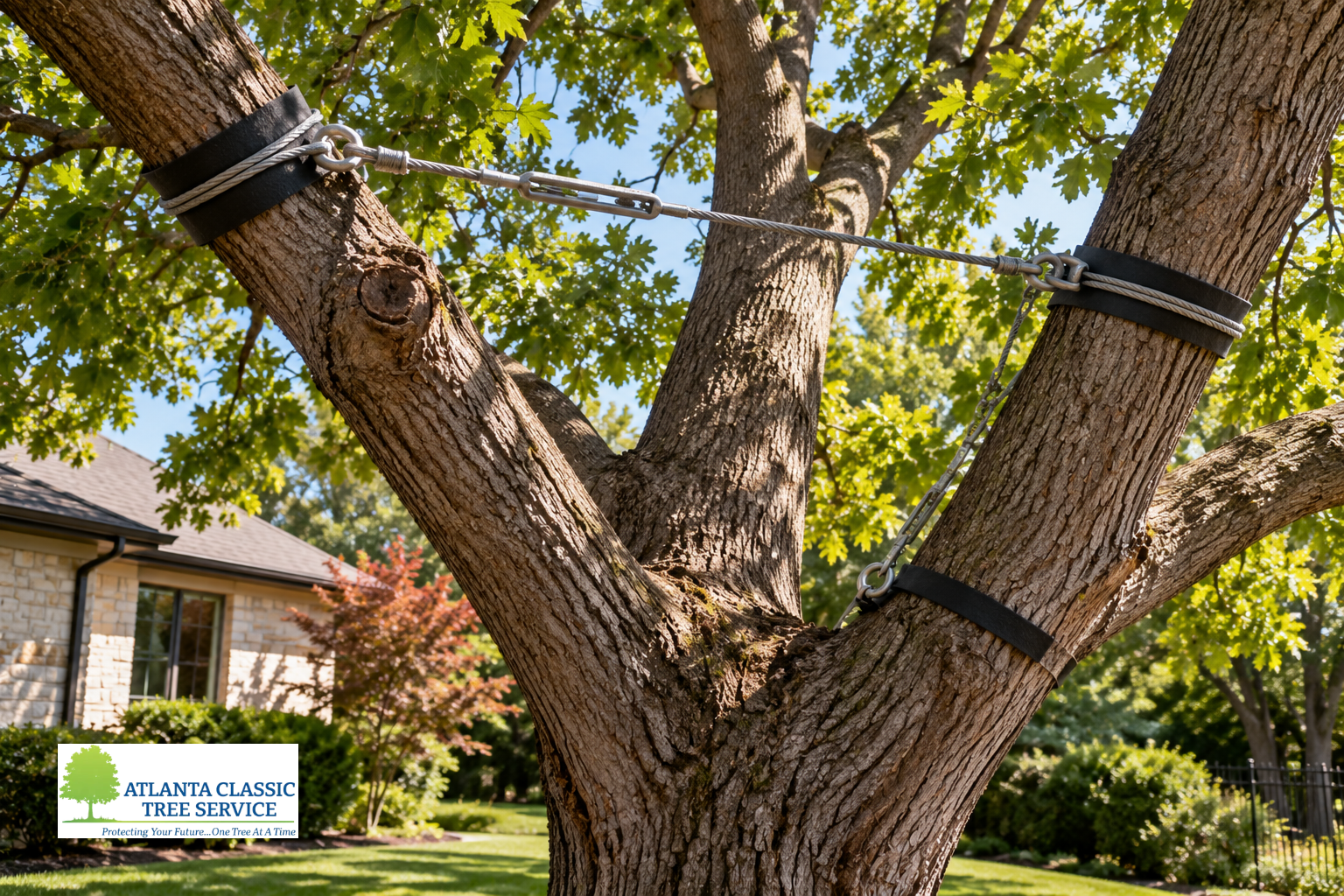
A thick tree canopy close to your home can keep exterior surfaces damp longer after rain, which encourages mold, mildew, and rot in vulnerable areas. Plus, branches touching your home can provide a path for insects or small animals. Even if the tree is healthy, its proximity can lead to frequent cleanup, repeated repairs, and a property that doesn't perform as well over time. For those looking to protect their yard while fixing the problem, services like cabling and bracing can stabilize a valued tree while other issues are addressed.
How to Tell If a Tree Is Too Close to Your House
Visible Warning Signs Around the Foundation
Look for visible root growth near the slab, basement wall, or driveway. Cracks in interior drywall, sticking doors, and uneven floors can also indicate movement that deserves attention. If the soil around your house's base looks raised, dry, or unusually disturbed, the root system might be affecting the area more than you think. A professional tree risk assessment can help determine if these symptoms are connected to the tree or another structural issue.
Canopy Contact and Roof Encroachment
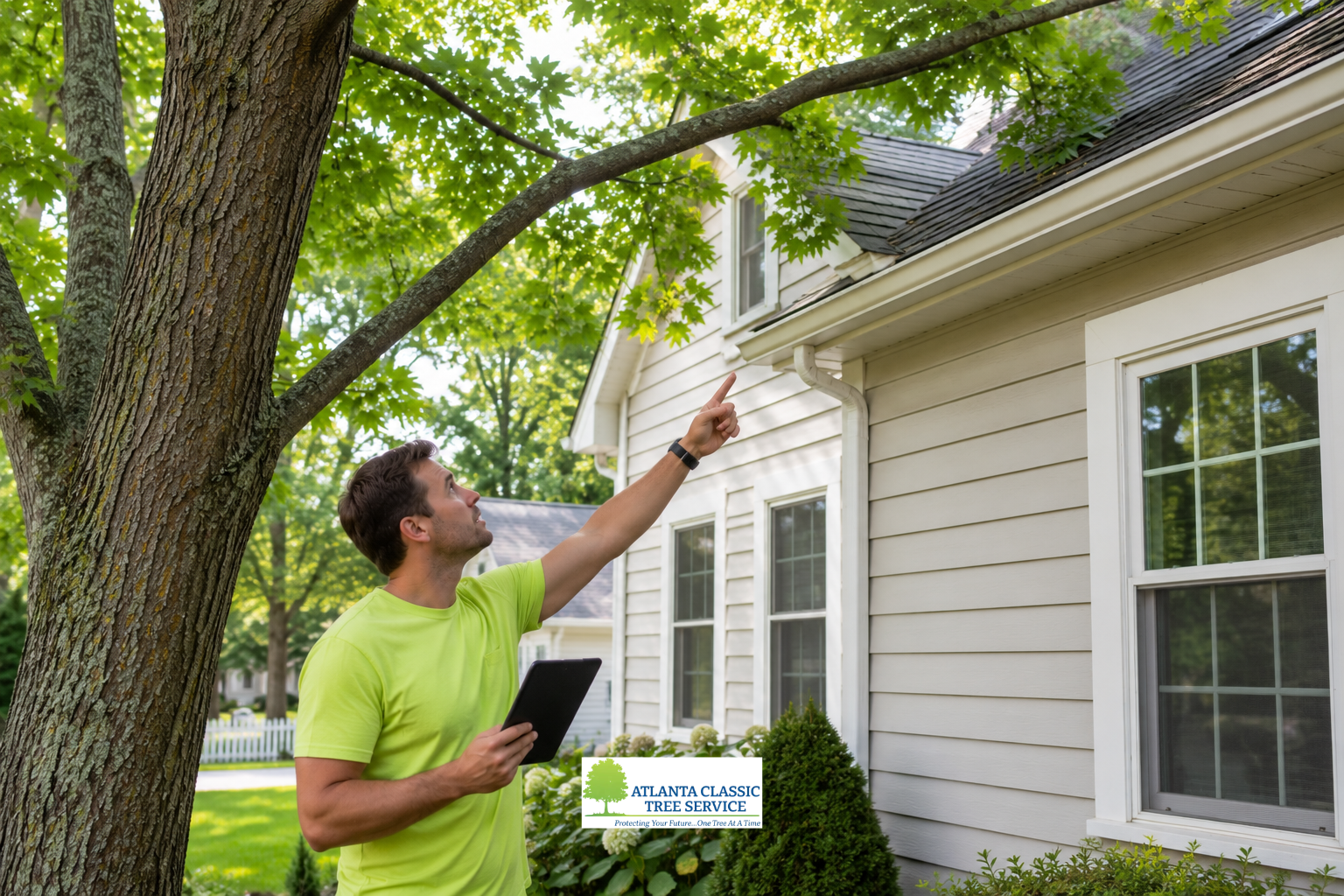
Branches shouldn't be scraping shingles, resting on gutters, or hanging so low that they block regular roof access. When limbs brush against your home in moderate wind, they can slowly wear down roofing materials and create openings for water intrusion. The problem can worsen if the tree grows fast or if a seasonal storm adds weight to the canopy. If you're seeing physical contact, it's usually time to schedule professional trimming rather than waiting for the next storm.
Dead Limbs, Decay, and Leaning Trunks
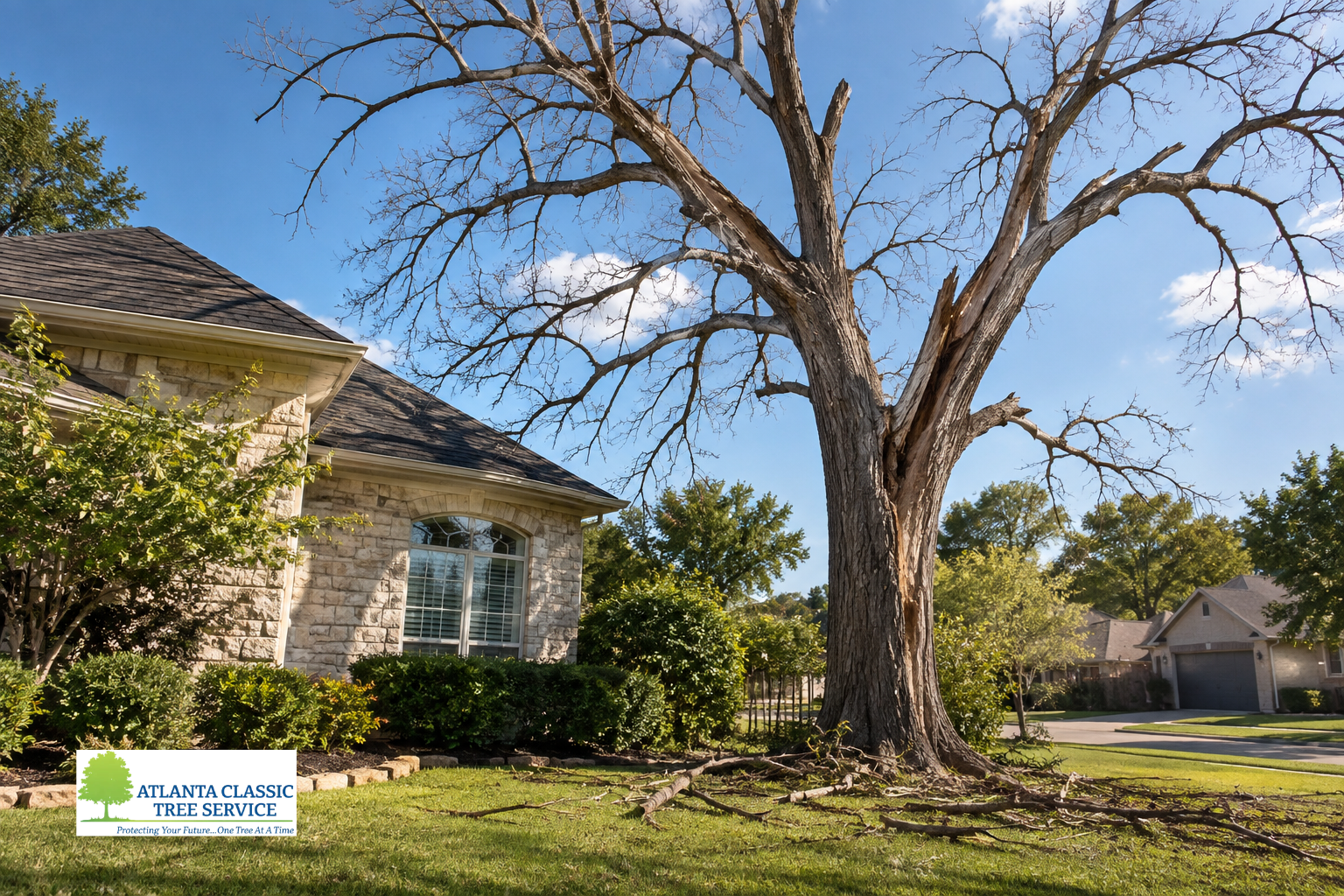
Distance is only part of the issue. A healthy tree that's close to your house might be manageable, but a tree with decay, deadwood, or structural instability can become dangerous much sooner. Warning signs like mushrooms at the base, cracking bark, hollow sections, or a pronounced lean should prompt an expert evaluation. You can also check out our guide on spotting an unsafe tree for more details on visible hazards homeowners shouldn't ignore.
What Certified Arborists Recommend First
Start with a Professional Inspection
The first step is almost always a qualified inspection. A certified arborist can identify species-specific growth habits, root spread, decay, and potential failure points that are easy to miss from the ground. They can also determine whether the tree is structurally sound enough to keep or whether removal is the safest choice. Homeowners often save money by getting an early assessment because small corrective steps are typically less expensive than emergency repairs after a branch failure or foundation problem.
Use Pruning to Reduce Immediate Risk
Pruning is often the most practical short-term solution. By removing dead limbs, reducing weight on overextended branches, and improving clearance above the roof, the tree becomes less likely to cause damage. Proper pruning also improves airflow and light penetration, which can make the landscape healthier overall. If you want to know when trimming makes the biggest difference, our article on tree pruning signs is a helpful companion resource.
Consider Root Barriers and Soil Management
Root barriers can help redirect roots away from foundations, patios, and utility lines when installed correctly and in the right situation. They aren't a universal fix, but they can be useful for high-value trees that homeowners want to keep. Soil moisture management also matters because roots often migrate toward areas with better water conditions. A proper plan may include irrigation adjustments, mulching, and carefully targeted excavation rather than aggressive cutting that could destabilize the tree.
How Far Should Trees Be Planted From a House?
General Distance Guidelines by Mature Size
Arborists often recommend planting small trees at least 8 to 10 feet from a structure, medium trees 15 to 20 feet away, and large trees 25 to 30 feet away. Those numbers are not arbitrary; they reflect the mature spread of roots and canopy growth. A tree that looks harmless at planting size can become a major issue years later if it is chosen without considering its full mature width. This is why planning matters more than simply picking a pretty species at the nursery.
Why Species and Site Conditions Matter
Not all trees behave the same way. Some species have more aggressive root systems, while others spread more shallowly near the surface. Soil type, drainage, slope, and available space can all influence how roots develop. In clay-heavy or compacted soils, roots may spread laterally in search of oxygen and water, which can increase the chance of interference with nearby structures. For homeowners in North Georgia, local climate and soil conditions should always be part of the decision-making process, especially when a site is already tight.
When a Close Tree Can Still Be Kept Safely
A tree doesn't automatically need to be removed simply because it is near the house. If the tree is healthy, properly pruned, and monitored regularly, it may remain part of the yard safely for years. In some cases, cabling or selective reduction pruning can reduce risk enough to preserve a mature tree that adds meaningful value to the property. The key is matching the solution to the tree’s condition, species, and location rather than applying a one-size-fits-all rule.
What to Do If the Tree Is Already Causing Damage
Document the Symptoms and Limit Further Stress
If you notice cracks, roof damage, or root heaving, start by documenting the issue with photos and notes. This can help when speaking with an arborist, contractor, or insurance provider. Try not to perform heavy DIY pruning or cut roots aggressively on your own, because sudden changes can weaken the tree and increase the chance of failure. Instead, reduce stress around the area, keep people away from damaged limbs, and arrange for a professional assessment as soon as possible.
Decide Between Pruning, Root Management, or Removal
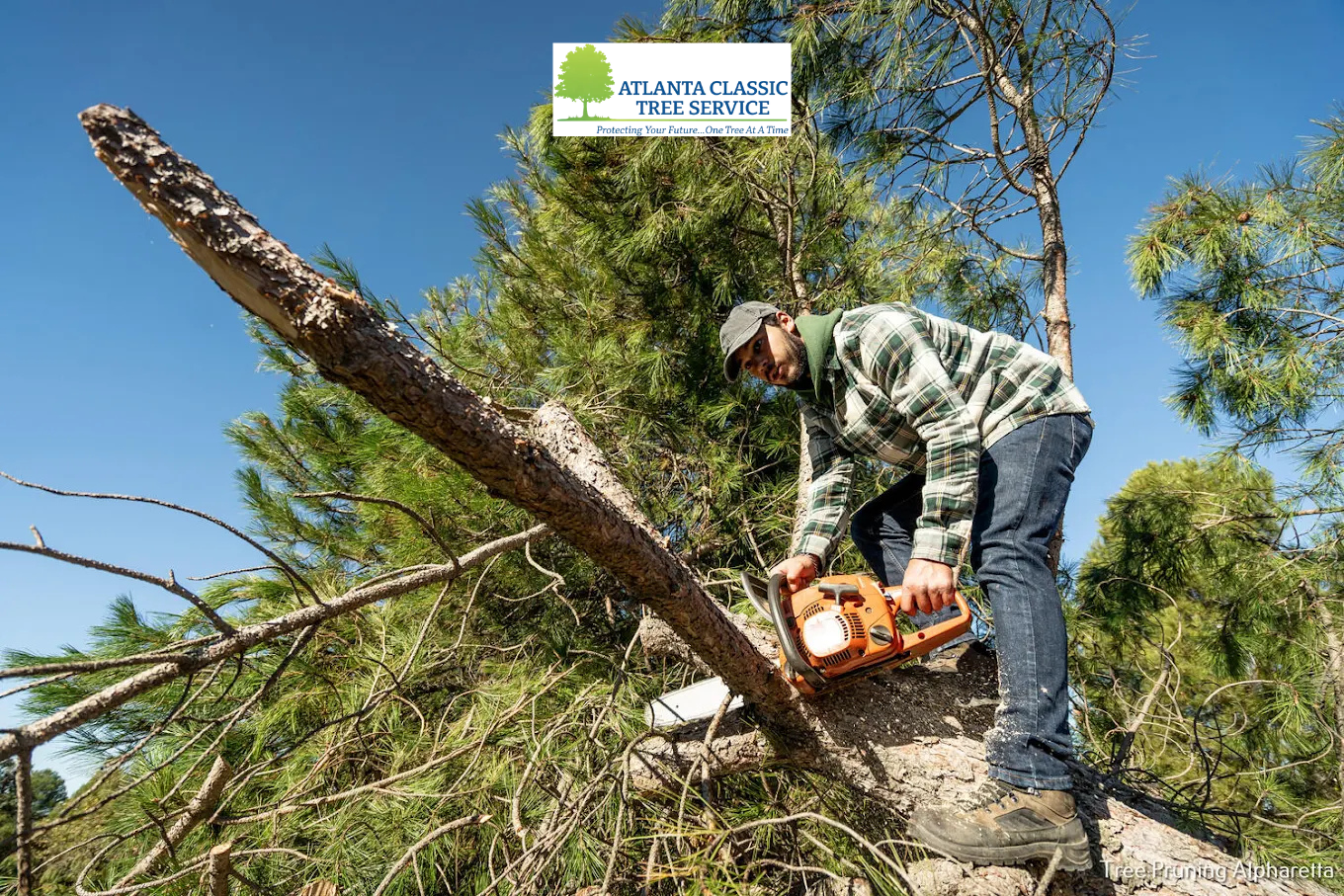
For minor problems, pruning and root management may be enough. For moderate risk, a combination of cabling, structural reduction, and monitoring may make sense. But if the tree is large, declining, leaning, or causing active structural damage, removal may be the safest long-term option. In our experience, the right answer is rarely based on emotion alone; it comes from balancing tree health, property safety, and cost. A thorough review of cabling & bracing and tree removal options can clarify what is realistic before damage escalates.
Know When to Call for Emergency Help
If a branch breaks and lands on the house, if roots have lifted a slab, or if the tree is leaning suddenly after a storm, treat the situation as urgent. Do not stand under the canopy or attempt to cut unstable limbs without proper equipment and training. Severe hazards should be handled by professionals who understand tree biomechanics and site safety. In emergencies, a fast response can prevent secondary damage to the roof, windows, utility lines, and nearby vehicles.
Real-World Example: A Close Tree in Alpharetta
How Proactive Intervention Prevented Bigger Repairs
In one notable case, a homeowner in Alpharetta noticed cracks near the foundation of a house with a large oak planted too close to the structure. The tree also casts heavy shade and drops debris into the gutters every season. After a certified arborist inspected the site, the homeowner learned that root pressure and moisture patterns were contributing to the issue. The solution included root barriers, selective pruning, and ongoing monitoring, which helped preserve the tree while reducing further risk.
What This Case Teaches Homeowners
This example shows how early action can preserve both the yard and the home. If the problem had gone unnoticed, the homeowner might have faced more extensive foundation repair, more roof maintenance, or even emergency removal after a storm. Instead, the tree was managed strategically. That's the kind of outcome many property owners want: protecting the house without losing every mature tree on the lot.
How Tree Service Professionals Add Value
Better Diagnosis Leads to Better Decisions
Tree service professionals are not just cutters and haulers; they are diagnosticians for living systems. They can identify whether a tree’s proximity is truly dangerous, or whether the symptoms are caused by drainage, soil settling, or another landscaping issue. Their recommendations are usually more precise than a guess based on what the tree looks like from the driveway. That precision saves money, improves safety, and often preserves trees that still have a healthy future.
Services That Help Homeowners Protect Their Property
Depending on the situation, useful services may include pruning, removal, stump grinding, cabling and bracing, or even fertilization to support recovery after corrective work. If tree debris has already become a maintenance burden, cleanup planning can also matter after the tree work is finished. Homeowners can learn more about long-term yard support through related services such as fertilization and stump grinding, which help restore a property after dealing with a problem tree.
Why Local Experience Matters
Local tree care experience is especially valuable because species selection, soil conditions, and seasonal weather patterns vary by region. In the Atlanta area, for example, homeowners often deal with fast-growing trees, storm exposure, and drainage concerns that affect how close a tree can safely remain to a house. A team familiar with the region can provide better guidance on when pruning is enough and when removal is the smarter investment. For homeowners who want a broader overview of structural impacts, our guide on how tree roots impact buildings offers additional context.
FAQ: Common Questions Homeowners Ask
Can I Just Cut the Roots Near My House?
Cutting roots without a plan can destabilize the tree and create a greater hazard. In some cases, even one-sided root loss can reduce support and increase the chance of failure. If roots must be managed, it should be done under professional supervision with the tree’s stability in mind. The goal is always to reduce risk without creating a worse one.
Will Pruning Solve the Problem Permanently?
Pruning helps, but it doesn't change the tree’s species, mature size, or root behavior. It is often a maintenance tool rather than a permanent fix. If the tree continues to grow toward the house or if the site is too cramped, ongoing pruning may be required. In some cases, the long-term answer is to remove the tree and replant a better-suited species farther from the structure.
Should I Plant Another Tree in the Same Spot After Removal?
Usually, not immediately. The old root zone may still affect drainage, compaction, and soil structure. If you want to replant, choose a species that fits the available space and follows safe distance guidelines. Planning with mature size in mind is the best way to avoid repeating the same problem years later.
Protecting Your Home and Yard Long Term
Set a Seasonal Inspection Routine
Inspect trees near your home at least once each season, and always after severe weather. Look for deadwood, new lean, root exposure, fungus, and contact with the roof or siding. Routine checks help you catch problems while they are manageable. If a tree is valuable but borderline risky, periodic inspection is one of the most cost-effective ways to stay ahead of damage.
Balance Aesthetics with Safety
It is natural to want mature trees close to the home for shade and beauty, but the best yard design respects the tree’s growth pattern. A well-planned yard can still feel lush without placing major structural pressure on the house. When safety and beauty are balanced correctly, the property looks better and functions better. That balance is the real goal of responsible tree care.
Work with a Trusted Tree Care Team
The right professional guidance can help you keep healthy trees, remove dangerous ones, and maintain your property with less stress. If you are unsure what to do about a tree growing too close to your home, schedule a consultation with an experienced tree care team that understands both the science of tree health and the realities of home protection. Atlanta homeowners who need practical help can learn more about our pruning, tree removal, and cabling & bracing services to find the right next step.
Conclusion: Act Early to Protect Your Home
A tree that is too close to your home is not always an emergency, but it should never be ignored. The right response depends on the tree’s health, size, distance from the house, and the symptoms already showing at the property. In many cases, early pruning, root management, or cabling can reduce the danger and extend the life of a valuable tree. In others, removal is the safest way to protect the structure, the yard, and the people who live there.
If you have noticed roots near the foundation, branches over the roof, or repeated gutter and siding issues, now is the time to act. A professional evaluation can save money, reduce risk, and give you a clear plan forward. Contact Atlanta Classic Tree Service at (770) 497-1941 or visit Atlanta Classic Tree Service to request expert help and protect your home before a small concern becomes a major repair.