When a tree becomes unsafe, it's not just the tree that's at risk. Falling branches, cracked trunks, unstable roots, and hidden decay can pose threats to people, cars, roofs, fences, and nearby buildings. For property owners, the tricky part is figuring out which warning signs are just cosmetic and which ones indicate a real safety issue. This guide will help you identify an unsafe tree, know when to call a certified arborist, and understand how professional tree risk assessment can help you act before an emergency strikes.
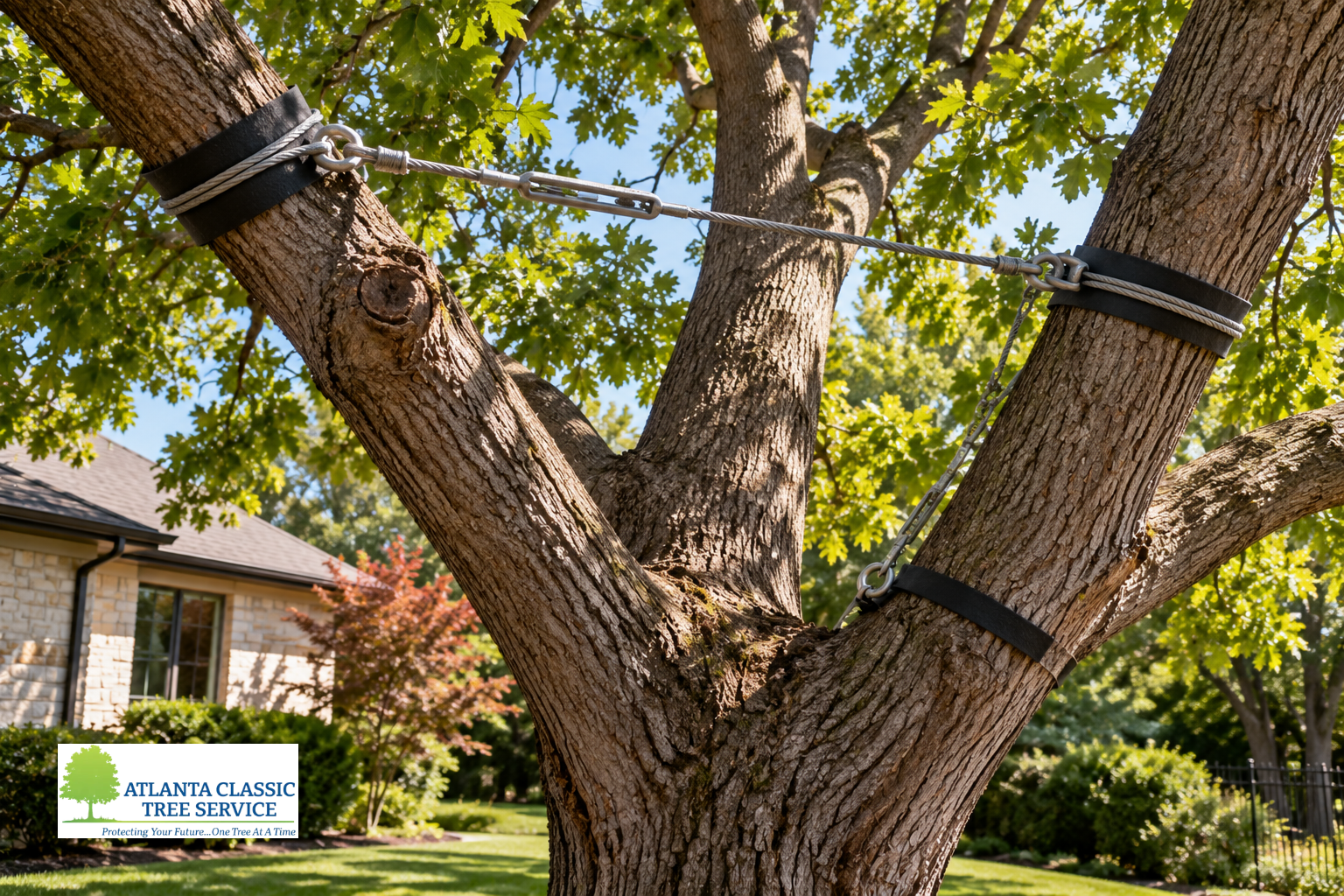
Regular inspections are crucial because tree issues often develop slowly and then fail suddenly. That's why homeowners and property managers often rely on services like tree pruning, cabling, and bracing to minimize risks before damage occurs. Sometimes, what seems like a minor defect can become a major hazard after heavy wind, rain, or soil movement. Spotting the signs early gives you more options and control.
Why You Shouldn't Ignore Tree Safety
Unsafe Trees Can Fail Without Warning
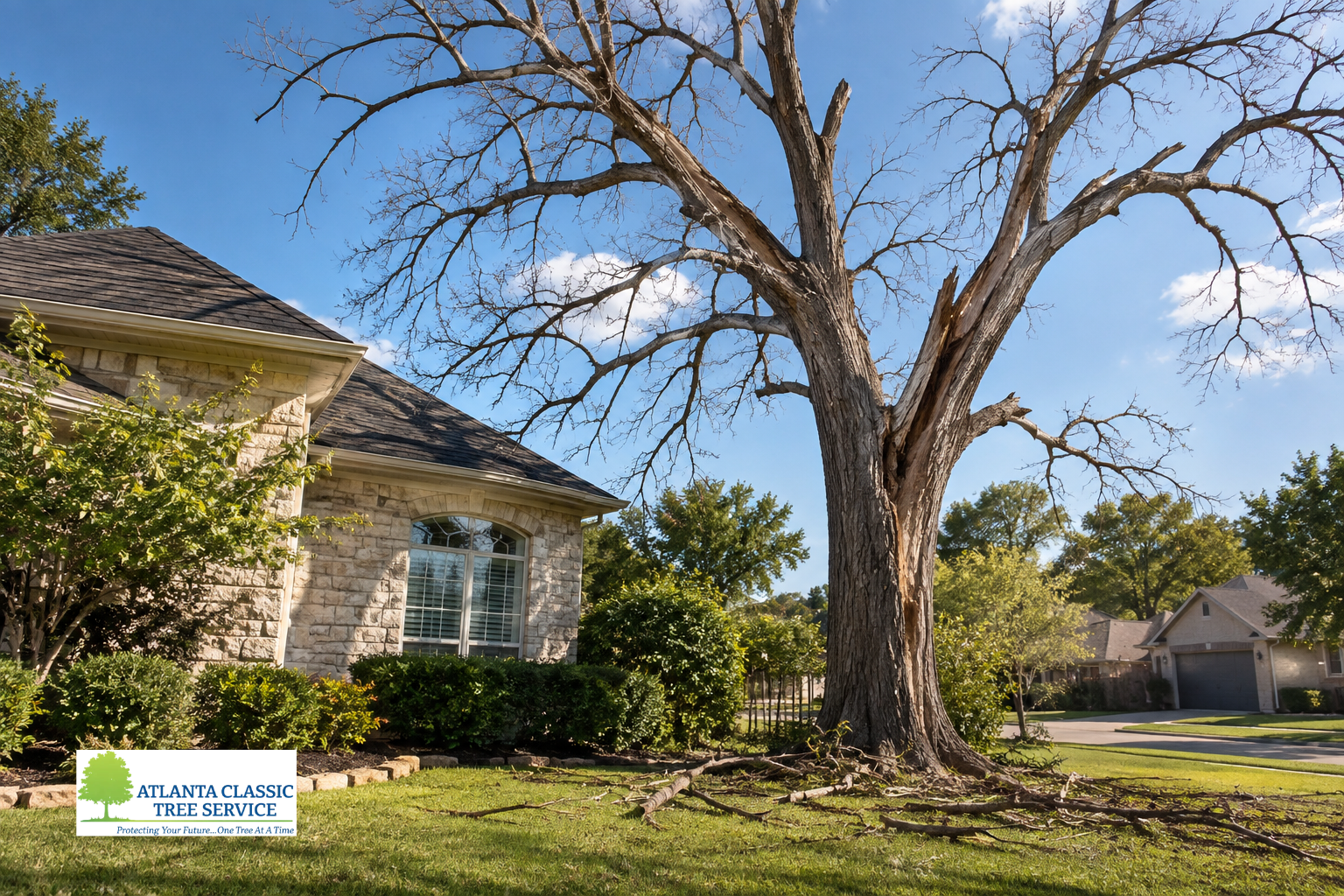
A tree with structural issues might stand for months or even years before something triggers its weakness. High winds, soggy soil, lightning, drought stress, and heavy canopy growth can all lead to sudden failure. A tree that looks stable from afar might be relying on a damaged root system or a weakened trunk that's no longer doing its job.
Research and arborists consistently point out that structural defects are a leading cause of tree-related accidents. The question isn't just whether a tree is alive; it's whether it can safely hold itself up in changing weather. Preventive management is much more effective than waiting for an emergency.
Safety Concerns for Homes and Businesses
At home, the obvious risks are damage to roofs, driveways, cars, and outdoor spaces. For businesses, the stakes are even higher. Unsafe trees near walkways, parking lots, entrances, or playgrounds can lead to liability issues. In a community area, a failing tree can block access or injure visitors. If a tree is already leaning, splitting, or dropping large limbs, it might need immediate attention through tree removal.
In places where storms are common, proactive care is especially important. Property owners who schedule regular inspections are better positioned to make informed decisions before a crisis. This approach protects both the property and the people using it daily.
Signs a Tree Might Be Unsafe
Sudden Leaning or Angle Changes
Some trees naturally grow with a slight lean, especially if they're reaching for sunlight or competing with nearby trees. Problems start when a tree begins to lean more, leans more over time, or appears to have shifted after a storm. A recent change in angle can point to root failure, unstable soil, or internal weakness. If the trunk is cracking at the base, the risk becomes more serious.
Cracks, Splits, and Trunk Wounds
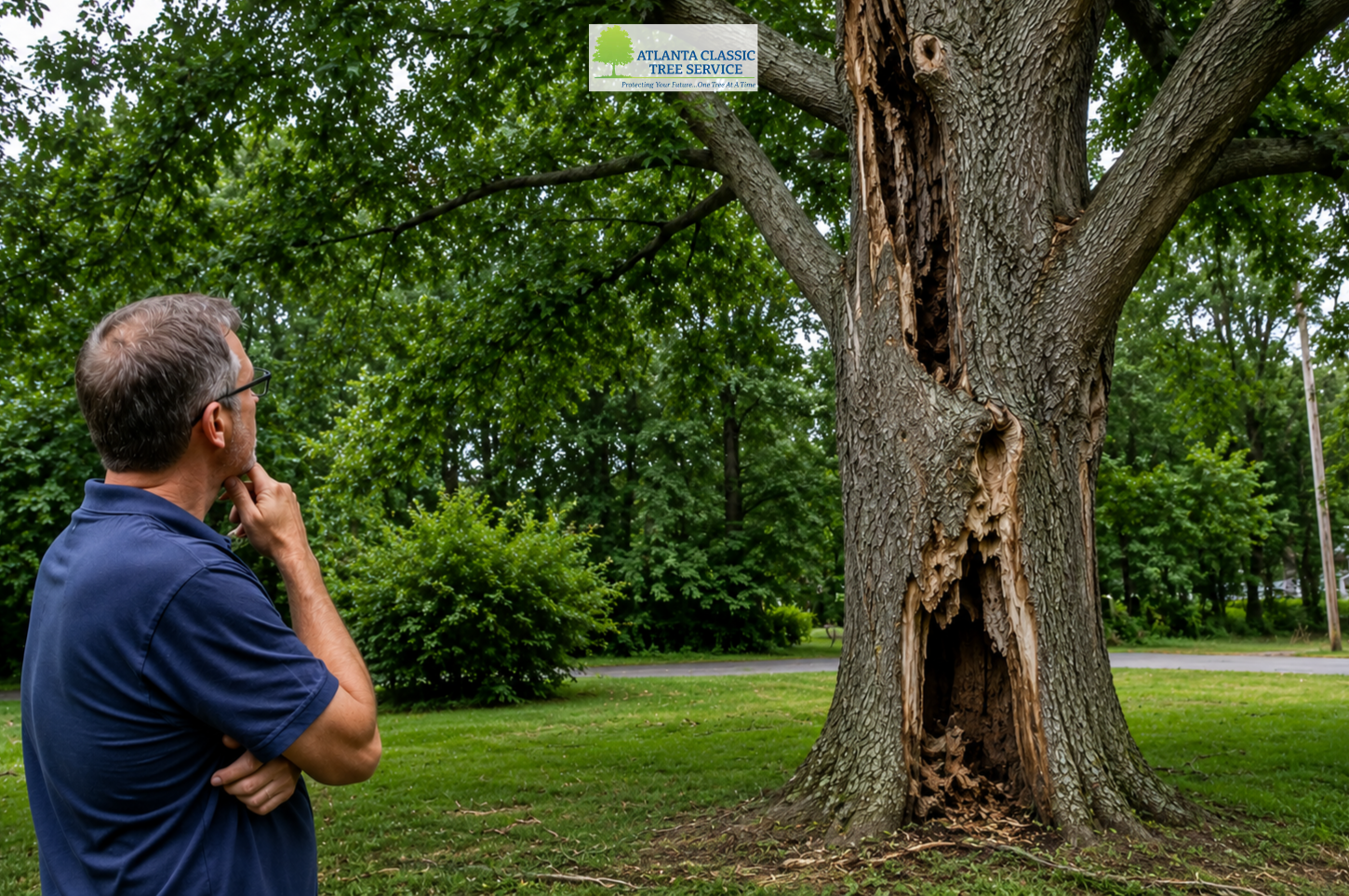
Vertical cracks in the trunk or large limbs are often warning signs that the wood is under stress. Not every wound is an emergency, but deep cracks, splits, and long seams should be checked by a professional. These issues may mean the tree has been weakened by weather, mechanical injury, or decay. Even if the bark closes around the wound, internal damage might still be there.
Decay, Fungi, and Hollow Areas
Fungal growth near the trunk, root flare, or major limbs often suggests internal decay. Mushrooms, conks, and soft or missing wood are especially concerning because they might mean the tree’s load-bearing tissue is compromised. A hollow trunk doesn't always mean immediate failure, but it does need expert evaluation. According to Purdue Extension, noting these issues helps arborists track changes over time and make better decisions about safety and care: how to identify tree defects.
Dead Limbs and Canopy Dieback
Large dead branches, thinning foliage, and a sparse canopy compared to previous seasons can all suggest a stressed tree. Dead limbs are dangerous on their own because they can fall without warning. More importantly, widespread decline can indicate a larger structural or health problem affecting the entire tree. If you notice deadwood overhead, it's smart to arrange professional pruning before the issue becomes a hazard.
How Arborists Check Tree Stability
Visual Inspections and Defect Mapping
A certified arborist starts with a detailed visual assessment. They look at the trunk, root flare, branches, canopy distribution, lean direction, and surrounding conditions. They also check for mushrooms, cracks, cavities, codominant stems, and soil disturbance. This process helps identify whether a tree is just stressed or if its structure is compromised enough to need immediate action.
One of the best parts of a professional inspection is documentation. Photos, written notes, and inspection dates create a record that can be compared over time. That history is especially helpful after storms or when monitoring a tree instead of removing it right away. For a closer look at disease-related decline that can overlap with structural weakness, you might find this resource useful: Spotting Tree Disease Early.
Static Load Testing and Modern Tools
Recent advances in tree care have improved the accuracy of stability assessments. Static load testing is one of the most important developments because it evaluates how a tree responds under controlled force. This method measures both the bending strength of the stem and the anchoring strength of the roots, giving arborists a clearer picture of structural integrity. It's especially helpful when the visual signs aren't enough to make a confident call.
This means a tree that looks questionable is no longer judged only by appearance. Modern testing can support decisions about pruning, cabling, bracing, or removal with greater precision. That helps property owners avoid unnecessary removals while still protecting people and property. For more on the science behind tree stability assessments, see the overview from Treeworks: tree stability assessment.
Root Zone and Soil Conditions Count
Tree safety isn't just about what you see above ground. Compacted soil, construction damage, grade changes, and root loss can all weaken a tree’s ability to stay upright. The root flare should be visible and healthy, not buried under too much soil or mulch. If soil has eroded on one side or been saturated for a long time, the tree’s anchoring strength might be reduced even when the canopy still looks full.
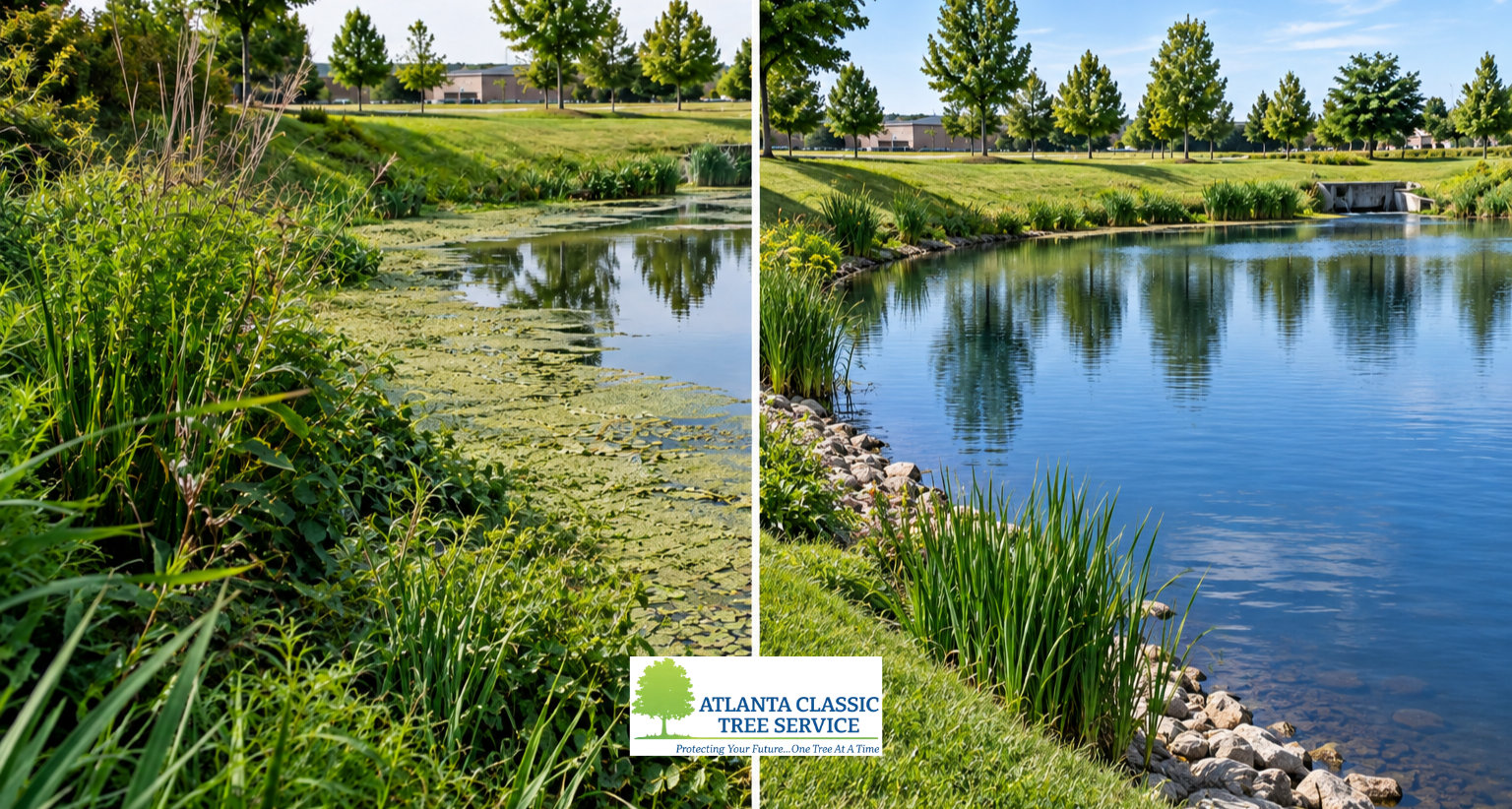
This is why trees near driveways, foundations, patios, and pond edges need special attention. If you're also dealing with erosion or drainage problems, coordinated care can be important. In some properties, regular detention and retention pond maintenance supports better site drainage and reduces water-related stress on nearby trees.
When to Check Your Trees
Routine Checks Every 3 to 5 Years
Most healthy mature trees benefit from a professional inspection every three to five years, even if they don't seem to have visible problems. This schedule gives arborists a chance to catch emerging defects before they become severe. Trees in high-traffic areas, near structures, or with a history of storm damage might need more frequent evaluation. Regular checks are a simple step that can prevent expensive surprises later.
After Storms, Drought, and Other Events
Major weather events should always prompt a follow-up inspection. Heavy rain can reveal root instability, while drought can weaken trees and make them more vulnerable to failure when winds return. Ice, lightning, and high winds can damage limbs or split stems even when the damage isn't immediately obvious. After severe weather, it's wise to prioritize safety and have any suspicious trees checked promptly.
For tall trees or heritage specimens, extra protection may be worthwhile. A well-designed lightning protection system can reduce the risk of strike-related damage in vulnerable trees and preserve valuable landscape features.
After New Construction or Changes
Tree risk can increase when a property changes around the tree. Excavation, grading, trenching, and root cutting can destabilize even a healthy-looking tree. If construction has altered drainage or soil compaction, the tree should be checked again. This is especially important on commercial sites where root systems may be impacted by sidewalks, parking lots, or underground utilities.
What Owners Can Check Safely
Look for Visible Warning Signs
Homeowners can do a basic safety check without climbing the tree or using special equipment. Walk around the tree and look for new lean, exposed roots, mushrooms at the base, trunk splits, dead limbs, or missing bark. See if the tree has a balanced canopy or if one side looks heavier than the other. These simple observations can help you decide whether to call an arborist sooner rather than later.
Watch for Changes Over Time
One of the best ways to detect an unsafe tree is to compare it against its own past condition. A tree that has lost leaves earlier than normal, dropped more branches than usual, or shifted position in the soil shouldn't be ignored. Taking photos after storms or at the start of each season can help you track subtle changes. This kind of record is especially useful if you need professional advice later.
Know When DIY Ends, and Expert Help Begins
Basic observation is safe, but climbing ladders, cutting large limbs, or probing the trunk yourself can be dangerous. If you see a major crack, a severe lean, or evidence that the root system has failed, leave the tree alone and contact a professional. Certified arborists have the training to assess risk safely and recommend the right next step. In many cases, timely intervention can preserve a tree; in other cases, removal is the safest choice.
Common Mistakes in Judging Tree Safety
Assuming Green Leaves Mean Safety
A full canopy can create a false sense of security. A tree may still have serious structural defects even if its leaves look healthy. Internal decay, root damage, or a weak trunk can remain hidden until a storm or heavy wind triggers failure. The lesson is simple: appearance alone doesn't equal safety.
Ignoring a Lean That Gets Worse
Many people become used to a tree’s lean because they've seen it that way for years. The problem isn't always the existence of a lean, but whether it has changed. When a tree begins to angle more dramatically, or the soil at the base starts to heave, it may be signaling instability. Trees with a worsening lean should be examined before they become a hazard.
Delaying Action Because the Tree Is Valuable
It's understandable to want to save a mature tree, especially if it provides shade, beauty, or sentimental value. But delaying a safety decision can increase the chance of property damage or injury. The better approach is to combine preservation efforts with honest risk assessment. Services like cabling and bracing can sometimes extend the life of a tree, but only when the structure is still suitable for support.
Real-world Example: When a Tree Becomes a Hazard
A Mature Oak Near a Playground
In a recent assessment, a certified arborist examined a mature oak tree with a noticeable lean and visible trunk cracks. The tree stood near a playground, which increased the risk dramatically if it failed. Although the tree still had foliage, the inspection revealed enough structural concern to justify removal. The decision was tough, but it eliminated the possibility of injury and kept the area safe for families.
Why the Right Call Protects More Than the Tree
Cases like this show why tree risk assessment is so important. The goal isn't to remove trees unnecessarily; it's to make smart decisions based on safety, structure, and site use. Sometimes the best outcome is pruning or support. In other cases, the safest option is removal followed by cleanup and future planning. If a stump remains after removal, stump grinding can help restore the area and reduce trip hazards.
Organizations like the USDA Forest Service also emphasize that tree health and site conditions are closely connected, especially after storms and drought stress. Their educational materials remind us that trees should be managed as living structures, not static objects: urban tree care.
Why Professional Tree Risk Assessment Is Worth It
Better Decisions, Fewer Surprises
A professional assessment gives you more than an opinion. It provides a structured process for deciding whether to monitor, support, prune, or remove a tree. Arborists evaluate tree defects in context, considering species, age, location, load-bearing structure, and exposure to wind. That context matters because two trees with the same crack might not present the same level of risk.
Protection for Homes, Businesses, and Shared Spaces
For homeowners, the payoff is peace of mind. For businesses, schools, HOAs, and rental communities, the payoff also includes liability reduction and better planning. A dangerous tree near an entrance or parking area isn't just a routine landscape concern; it's a safety issue that deserves a professional response.
Support for Long-term Tree Health
Even when a tree is structurally safe, it may still benefit from maintenance that improves balance and reduces strain. Proper pruning, soil care, fertilization, and selective support can all contribute to stronger long-term structure. In some cases, tree health services like fertilization can help reduce stress so the tree is better able to recover from environmental challenges.
FAQ: Structural Tree Safety Questions Answered
How Can I Tell if a Tree Is in Immediate Danger?
If a tree has a fresh split, a sudden lean, exposed roots lifting from the soil, or large dead limbs over a high-use area, treat it as urgent. Don't stand under the tree or try to cut branches yourself. Call a certified arborist quickly to assess the tree safely.
Can a Tree with Decay Still Be Saved?
Sometimes, yes. It depends on the amount of decay, where it is, and whether the tree can still support its own structure. Some trees can be managed with pruning or cabling, while others have progressed too far to remain safe. The only reliable way to know is through a professional assessment.
Should I Remove a Tree That Is Leaning?
Not always. A slight lean can be normal, especially if it developed gradually. The concern is a new or worsening lean, especially when paired with trunk cracks, root damage, or soil movement. In those cases, removal may be the safest choice.
What if the Tree Is Near My House but Looks Healthy?
Healthy-looking trees can still fail if their structure has been weakened below the surface. Trees close to structures deserve regular inspections, even when they appear normal. If you're unsure, schedule a professional assessment before storm season or after any major site change.
Final Thoughts: Act Early and Protect Your Property
Safety Starts with Awareness
Knowing how to spot an unsafe tree gives you the power to respond before damage happens. Look for changes in lean, cracks, decay, dead limbs, and root disturbance. Remember, the most dangerous problems are often hidden from casual view. When in doubt, rely on a certified arborist rather than guessing.
Take the Next Step with a Professional Evaluation
If you suspect a tree may be unsafe, don't wait for the next storm to prove it. A timely inspection can lead to pruning, support, monitoring, or removal before anyone gets hurt. For property owners who want expert guidance and dependable care, Atlanta Classic Tree Service provides experienced tree risk assessment and practical solutions tailored to the property’s needs. To learn more, explore our tree removal, pruning, and cabling and bracing services, or review our local expertise in Downtown Alpharetta.
If you're ready to protect your home or business, contact Atlanta Classic Tree Service for a professional evaluation and a plan that keeps your landscape safer year-round.