How Tree Roots Impact Buildings and What You Can Do About It
Tree roots are essential for a healthy yard, but they can become a problem when they get too close to houses, driveways, and sidewalks. Understanding how roots interact with the soil and nearby structures can help homeowners and property managers prevent costly damage. Solutions often involve managing root growth through services like tree pruning, cabling and bracing, and, if necessary, tree removal.
Research shows that roots can affect foundations in several ways. They might put pressure on walls, get into cracks, and change the moisture levels in the soil, leading to movement over time. The U.S. Geological Survey explains that soil moisture changes can significantly impact ground stability, especially in clay-rich areas that expand and shrink with water changes. This makes root management especially important in places with varying soil conditions, like many neighborhoods in Georgia.
In this guide, you’ll learn how roots affect nearby structures, which tree species pose greater risks, how to spot warning signs early, and the best prevention strategies. We’ll also explore expert practices, practical maintenance steps, and a real-world example of root-related damage. Whether you manage a commercial property or care for a home yard, the right approach can protect both your trees and your foundation.
How Roots Interact with Soil and Structures
Roots: More Than Just Anchors
Many people think of roots as anchors, but they’re actually active systems searching for water, oxygen, and nutrients. Roots spread out and adapt to their surroundings rather than growing predictably. If a foundation creates an easy path, roots might move toward cracks, voids, or moist soil near the structure.
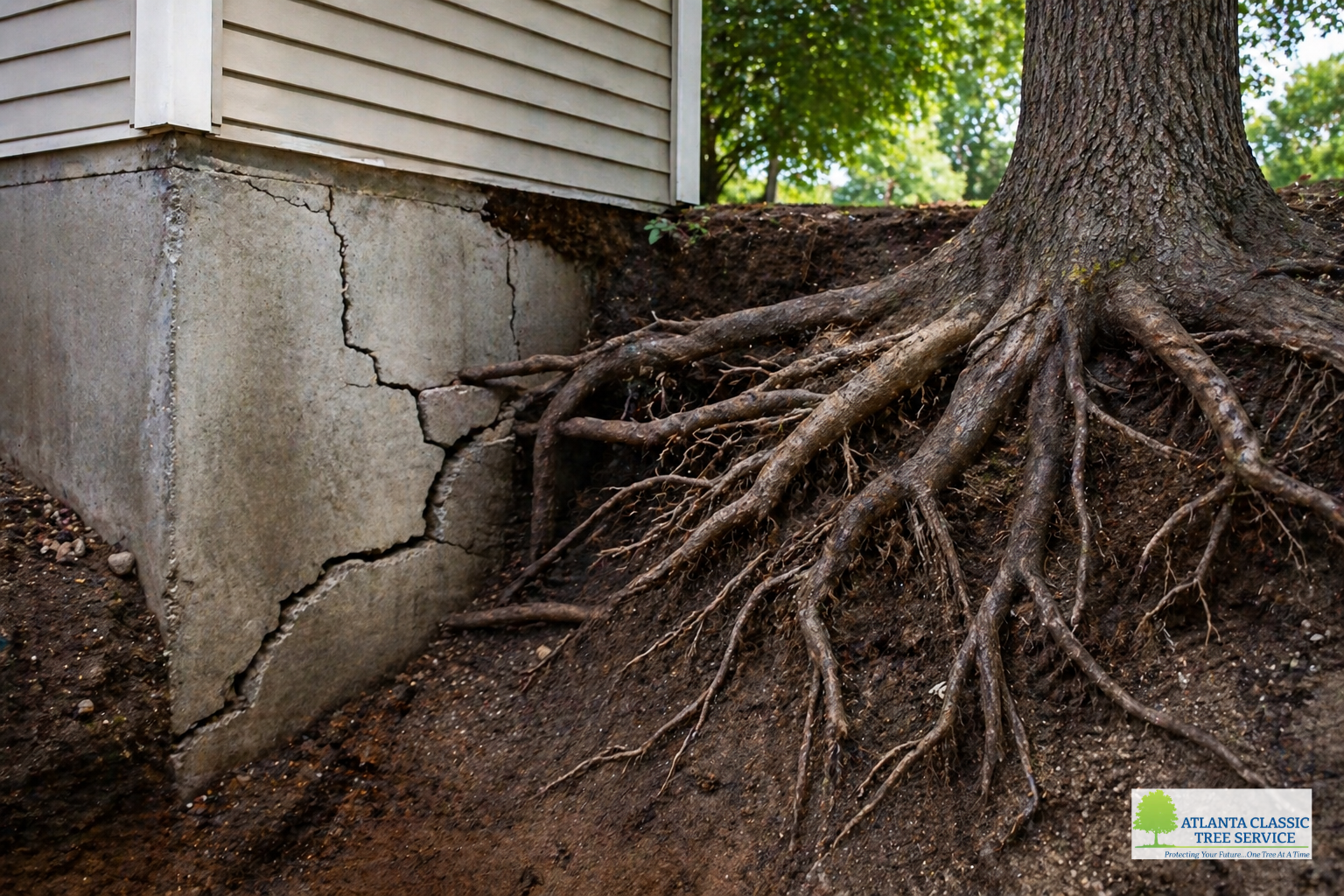
Roots usually don’t "break" a solid foundation on their own. The bigger issue is that they exploit existing weaknesses. Small cracks, aging mortar, poorly compacted backfill, and leaky plumbing can all invite root intrusion, which can worsen an already unstable condition over time.
Soil Moisture Changes Matter
One often overlooked way roots affect foundations is by altering soil moisture. Large trees can absorb a lot of water, causing clay soils to shrink and settle. As explained in our tree trimming guide, many foundation problems result from uneven movement beneath the slab or wall rather than direct root contact.
When soil dries out unevenly, one part of a structure may settle faster than another, leading to sloping floors, misaligned doors and windows, wall cracks, and gaps between trim and ceilings. In wetter conditions, roots and surrounding vegetation can keep soil unevenly saturated, creating different movement patterns that stress foundations. The long-term risk isn’t just cosmetic damage; it’s structural instability that can be costly to repair.
Which Trees Pose the Most Risk to Foundations?
Species with Aggressive Roots
Not all trees are equally risky. Willows, silver maples, poplars, elms, and some oaks are known for vigorous root growth. The International Society of Arboriculture notes that these roots may extend two to three times wider than the tree canopy, meaning even a tree that looks "far enough away" can still affect a structure underground.
Strategic planting is as important as tree care. Shade trees like maples, oaks, and elms should be planted at least 20 feet from structures, while smaller ornamental species might be suitable closer in, depending on the site. Combining thoughtful species choice with preventive care services such as targeted fertilization can help trees grow without causing root problems.
Shallow Roots vs. Deep Roots
Some trees have shallow roots, which can be problematic near sidewalks, driveways, and foundations. These roots spread near the surface, where soil conditions fluctuate most and where infrastructure is often concentrated, creating lifting, cracking, and trip hazards.
Deep-rooted trees aren’t automatically safe. A tree with deeper roots can still send lateral roots outward in search of moisture, especially in compacted or poorly watered landscapes. The key is understanding the whole site: soil type, drainage, existing structures, irrigation patterns, and nearby trees all influence risk.
Signs Your Foundation May Be Affected by Roots
Visible Changes Around the Home
One clear sign of root-related trouble is a change in the structure of walls, floors, or hardscape. Cracks in basement walls, crawl space walls, or slab edges might indicate movement in the soil beneath the home. Sticking doors and windows, leaning steps, and gaps around trim can also signal that one side of the building is shifting more than another.
Sidewalks and driveways can provide early clues, too. When roots grow beneath concrete, they may create raised sections or uneven slabs. Even if the foundation appears stable, these surface changes can show that roots are active and may already be affecting underground conditions.
Moisture, Drainage, and Soil Grade Changes
Poor drainage or visible soil movement around the property can also signal trouble. If the ground pulls away from the foundation, dips in certain areas, or stays wetter near one side of the building, roots may be part of the problem. Soil grade changes matter because water naturally follows the path of least resistance, and uneven ground can direct moisture toward vulnerable points.
Often, the first step is an inspection by a qualified professional who understands both tree biology and structural risk. If roots seem to be encroaching on hardscape or utility lines, a careful plan might involve stump grinding after removal, along with site cleanup and regrading where needed. For more guidance, the Foundation Repair Association offers helpful resources.
Preventing Root Damage
Choose the Right Tree for the Right Place
Prevention starts before damage occurs. One of the best strategies is selecting the right tree species and planting them smartly. Larger shade trees should be located farther from buildings, while smaller ornamental trees can often be placed closer with less risk. The goal is to match mature root behavior with the available space, not just the appearance of the tree at planting time.
Property owners should also consider future maintenance access. Trees too close to foundations can become difficult to inspect, prune, or manage later in life. A well-planned yard saves money over time by avoiding costly interventions and preserving both the tree and the structure.
Use Root Barriers and Managed Pruning
Modern root management techniques can reduce risk without harming tree health. Root barriers help redirect growth away from foundations, sidewalks, and driveways by creating a physical boundary underground. These are most effective when installed early, before roots have invaded the area. Strategic root pruning can also be useful, but it should be done carefully to keep the tree stable and healthy.
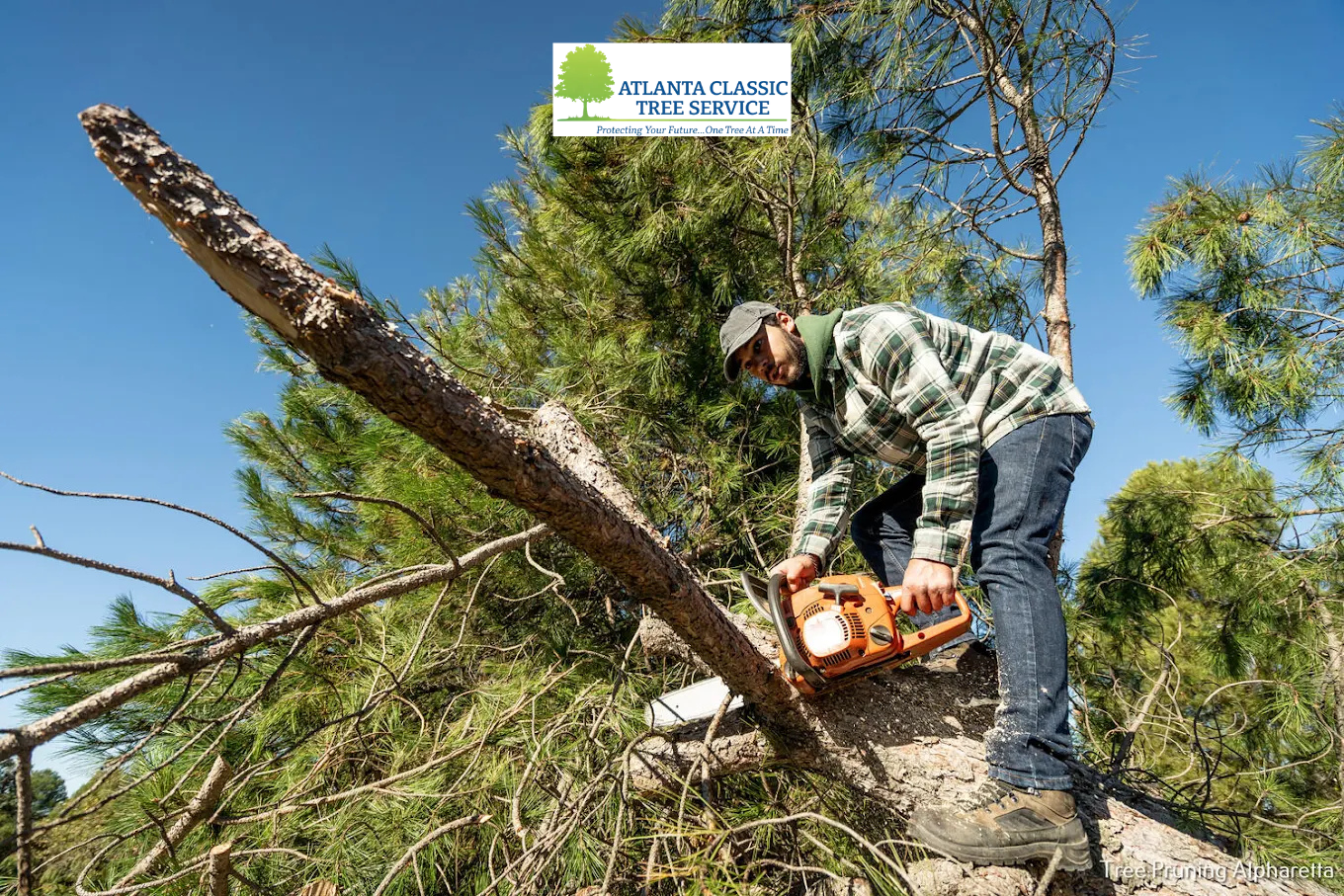
In some cases, root pruning is best paired with canopy pruning to restore balance and reduce stress on the tree. This is why many property owners choose professional pruning services rather than attempting large cuts themselves. Proper cuts, timing, and spacing all matter, especially when root activity is already affecting the property.
Monitor Irrigation and Soil Conditions
Soil moisture management is key to prevention. Overwatering near foundations can encourage root growth toward wet areas, while prolonged drought can cause clay soils to shrink and create settlement. A balanced irrigation plan supports yard health while limiting moisture swings that cause structural movement.
Mulch also plays a role, but it should be applied correctly and kept away from direct contact with the foundation. Deep mulch or soil buildup against siding can trap moisture and create additional risk. If your property also needs support for ground cover or erosion control materials, wood shavings delivery can be used thoughtfully in the right applications.
Best Practices for Homeowners and Property Managers
Regular Tree and Site Inspections
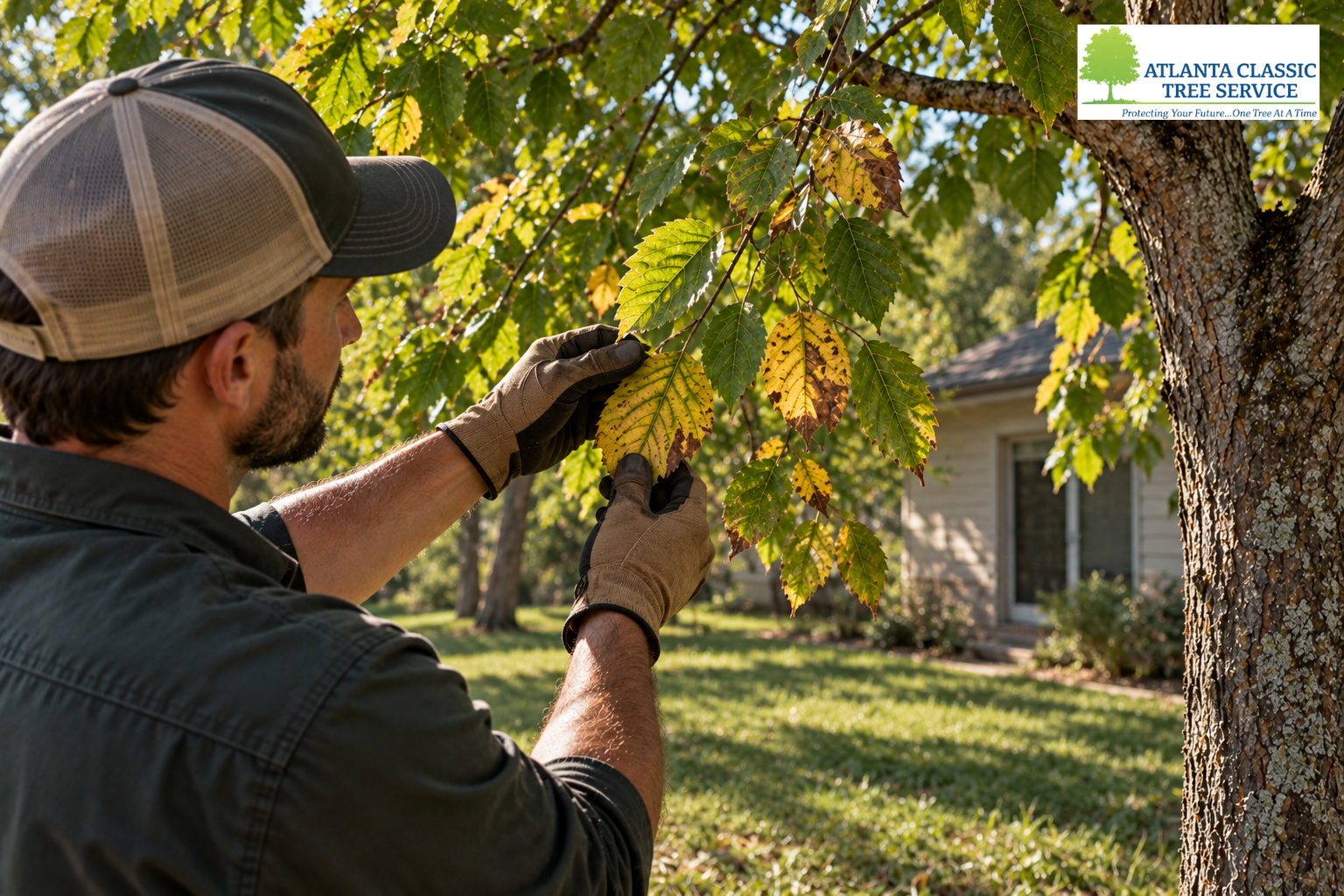
Routine inspection is one of the simplest ways to stay ahead of damage. A trained arborist can identify early warning signs such as root flare issues, soil heaving, deadwood, stress cracks, or signs that the tree is competing too aggressively for moisture. Inspections are especially important after severe weather, construction work, or noticeable changes in drainage.
Professional evaluations can help determine whether the concern is caused by tree roots, foundation settlement, or another issue entirely. That distinction matters because not every crack near a tree is actually root-related. A good plan begins with an accurate diagnosis, then moves to targeted action rather than guesswork.
Know When to Support or Remove
Sometimes the best solution is support rather than removal. If a large tree is valuable to the yard but has roots near a structure, a professional may recommend cabling, bracing, root management, or a modified pruning plan. In other cases, the tree may be too close to the foundation or too compromised to stay safely in place. When that happens, removal may be the only option to protect the property.
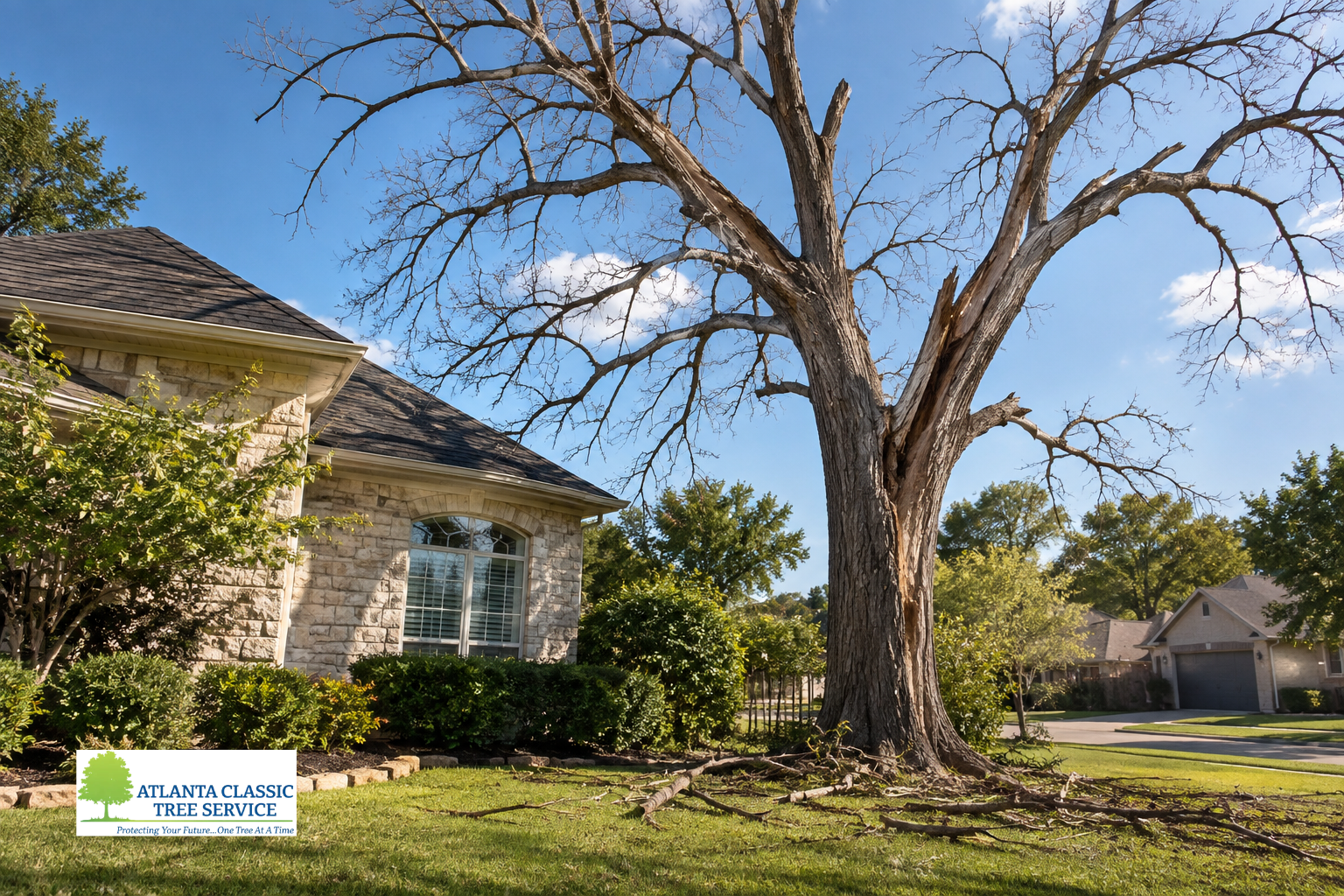
For situations where a tree is unstable, storm-damaged, or overcrowded near a building, cabling and bracing can sometimes reduce risk while longer-term decisions are made. If the tree must be eliminated, coordinating the process with site restoration helps reduce future hazards and allows the property to recover more quickly.
Work with Qualified Professionals
Tree-related foundation problems need both arboriculture and structural assessment. That’s why professional guidance is so valuable. Arborists understand tree biology, species behavior, and root management, while structural experts can evaluate the foundation and determine how much movement has occurred. Together, they can recommend a complete solution.
Organizations like the Tree Care Industry Association and the International Society of Arboriculture provide standards and educational resources that support best practices. These resources help homeowners understand why prevention, planning, and safety-focused work matter when trees grow close to buildings.
Real-World Case: Silver Maples and Foundation Problems
Noticing the First Signs
Imagine a homeowner who starts seeing cracks in the basement walls and floors that feel slightly uneven. At first, it seems minor, but then doors start sticking, and a patio slab begins to tilt. A closer look reveals several silver maples planted near the home years earlier, with visible roots lifting sections of nearby hardscape.
After evaluation, the problem is traced to aggressive root spread and changing soil moisture. The trees weren’t directly "pushing" the house apart, but their roots had infiltrated weak points and contributed to settlement patterns around the foundation. Root damage often builds slowly and is easy to overlook until symptoms become obvious.
Corrective Plan: Pruning, Barriers, and Monitoring
The correction plan in this case includes targeted root pruning, installation of root barriers, improved drainage, and ongoing monitoring. In areas where roots had already invaded a structural zone, additional foundation repair was necessary to stabilize the affected wall. The goal was not to eliminate every tree but to create a safer balance between the yard and the structure.
Situations like this highlight why education matters. Once a property owner understands how roots interact with foundations, it becomes easier to make informed choices about future planting, maintenance, and professional services. If you’re planning a larger yard renovation or need help with tree debris after work is complete, our tree debris management guide can help you plan the cleanup side of the project as well.
Why Tree Service Matters in Urban and Suburban Areas
Balancing Beauty and Safety
Urban and suburban properties often rely on trees for shade, curb appeal, and environmental benefits. But buildings, utilities, and pavement are close together, increasing the chance of conflict. Good tree service helps balance these priorities so properties stay attractive without becoming vulnerable to damage.
This balance matters in dense communities and commercial districts where trees provide comfort and value but must be managed carefully. Professional tree care can prevent liability issues, reduce repair costs, and support long-term yard health. Our article on how professional tree care increases property value explores the financial side of good maintenance.
Local Soil and Climate Conditions Matter
In clay-rich regions, seasonal moisture changes can make foundation issues worse because soil expansion and contraction are more pronounced. This means roots may have a stronger indirect effect on structures than in more stable soil types. Local climate patterns, irrigation practices, and tree density all influence how roots behave and how foundations respond.
That’s why property owners in Alpharetta and surrounding communities should think about tree placement and ongoing maintenance early, not after problems begin. A proactive approach is important for businesses, rental properties, and managed communities where multiple structures and yard features can be affected at once.
Frequently Asked Questions About Roots and Foundations
Do Roots Crack Concrete?
Roots usually don’t crack healthy, undamaged concrete on their own. More often, they exploit existing cracks or weak spots and then widen the problem over time. If concrete is already compromised, roots can make the damage worse by growing into the space created by movement or moisture changes.
Can Cutting Roots Harm the Tree?
Yes, cutting roots can stress a tree if done improperly or too aggressively. That’s why root pruning should be planned carefully and performed by a qualified professional who understands tree stability. If a tree has large structural roots near a foundation, it’s important to evaluate the overall risk before making cuts.
What Should I Do if I See Signs of Foundation Movement?
Start by documenting the issue with photos and notes, then schedule an inspection. If tree roots are involved, you may need a combination of arborist guidance and foundation evaluation. Early action often reduces repair costs and prevents the problem from getting worse.
Protecting Your Property
Get a Professional Evaluation Before Damage Spreads
Root-related foundation issues can be subtle at first, but they tend to become more expensive when ignored. The best time to act is as soon as you notice signs of movement, drainage changes, or root intrusion near structures. Professional tree care can help identify the source of the problem and recommend the right mix of pruning, barriers, or removal.
Atlanta Classic Tree Service has helped property owners protect yards and structures with services that include tree pruning, tree removal, stump grinding, and cabling and bracing. If you’re concerned about root systems near your foundation, scheduling an assessment now can prevent more serious damage later. For general property care, our team can also help determine whether ongoing maintenance or a one-time correction is the best fit for your site.
Call for a Safer, More Stable Yard
Whether you’re dealing with aggressive roots, a leaning tree, or a property that needs long-term planning, the right solution starts with expert advice. By combining tree care knowledge with structural awareness, you can preserve the beauty of your yard while protecting what matters most underneath it. If you’re ready to take the next step, contact Atlanta Classic Tree Service to discuss a customized plan for your property.
Protect your foundation, preserve your trees, and make a proactive plan before minor issues become major repairs.