How Tree Cabling and Bracing Can Rescue Your Trees
Trees add so much to our lives—they're beautiful, they give us shade, a nd they even have a role in the ecosystem. But sometimes, they need a little help to stay strong and healthy. If you've got a tree that's showing signs of weakness, like splitting or having multiple trunks, cabling and bracing might be just what it needs to keep going. For those in need of expert cabling and bracing services, this method can mean the difference between saying goodbye to a tree and watching it thrive.
Now, tree support systems aren't a quick fix for every issue, but they can be a great option when dealing with weak branches or a tree that's taken a beating from storms. A skilled arborist can often stabilize a tree before things get too serious. According to the International Society of Arboriculture, proper evaluation and care are key to reducing the risk of tree failure and helping your trees live longer. So, if you're curious about when these supports come in handy, how they work, and why they're good for both the tree and your property, keep reading.
What Tree Cabling and Bracing Actually Do
Cabling Keeps the Canopy in Check
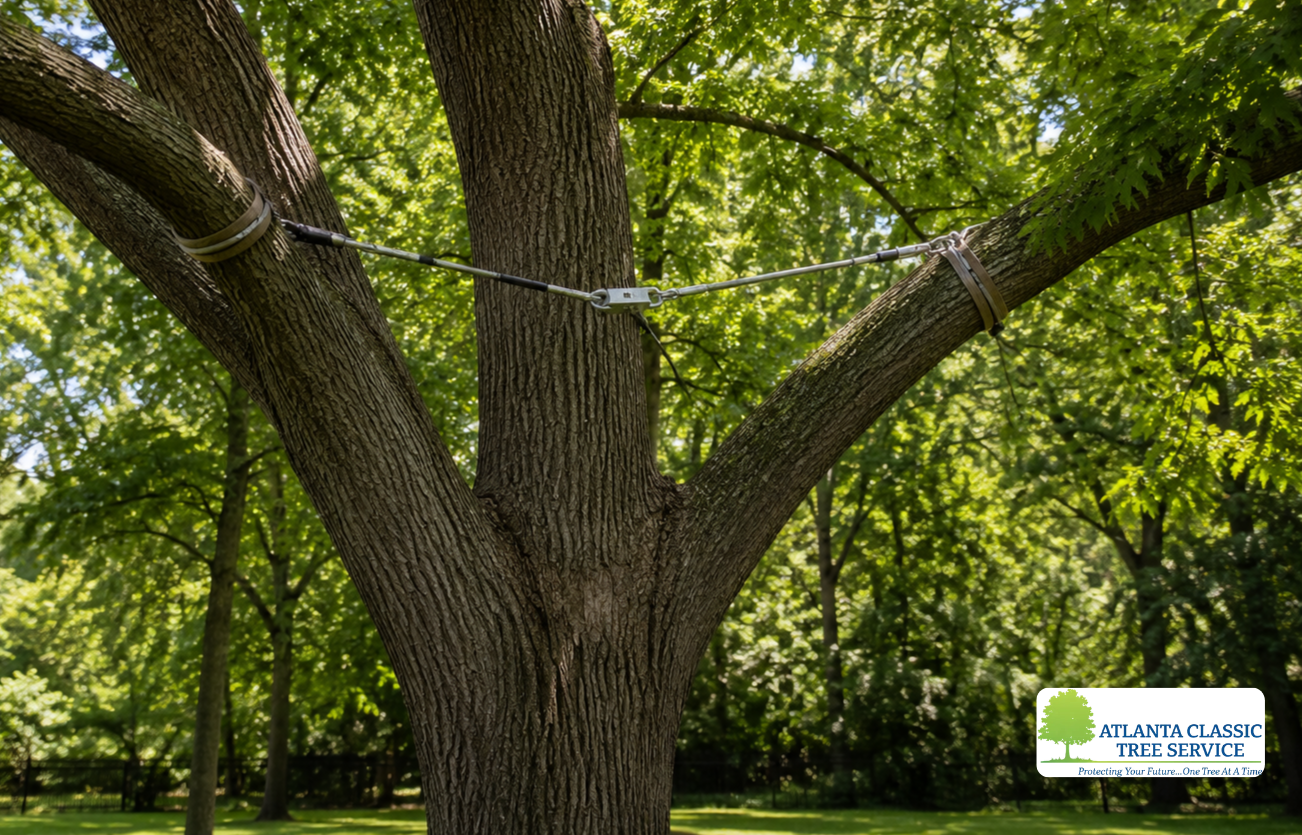
Tree cabling uses flexible steel or synthetic cables installed up in the canopy to spread out the stress between branches that need some extra support. The idea isn't to lock the tree in place but to reduce excessive movement that could cause damage during storms. A well-placed cable helps the tree stay intact without changing its natural look too much.
This is particularly important for trees with large stems or heavy limbs hanging over important areas like roofs or driveways. Instead of waiting for disaster, cabling helps distribute the load so the tree can grow more safely. And if you're already considering whether pruning services could help, cabling and pruning often work together as part of a broader tree care plan.
Bracing Strengthens Weak Spots
Bracing is all about adding rigid support with rods or bolts through weak trunk unions or split stems. While cables handle movement up top, braces provide direct support where there's a crack or an attachment that's not holding up well. It's often used for trees with a history of splitting or narrow unions that need some extra help.
Bracing can be particularly important for trees that hold sentimental or historical value. In those cases, removing the tree might feel like the last thing you want to do, and bracing can keep it around longer while reducing immediate risks. It's a common technique because it tackles structural issues without necessarily having to lose the tree.
Why Trees Are Sometimes at Risk
Not All Trees Grow Perfectly
Many trees grow in ways that look fine but aren't very stable. Multiple trunks, narrow branch angles, and uneven canopies can happen naturally, especially if a tree had to compete for light or got damaged earlier on. A tree might look lush and thriving while actually carrying internal stress that increases the risk of failure.
Arborists often check these issues before storms hit because wind and wet soil can quickly turn a hidden weakness into a broken limb. The National Weather Service often reminds property owners that strong winds and storms can create sudden hazards. A tree that stood strong for years might still fail in one bad storm if its structure is weak.
Weather and Decay Speed Up Problems
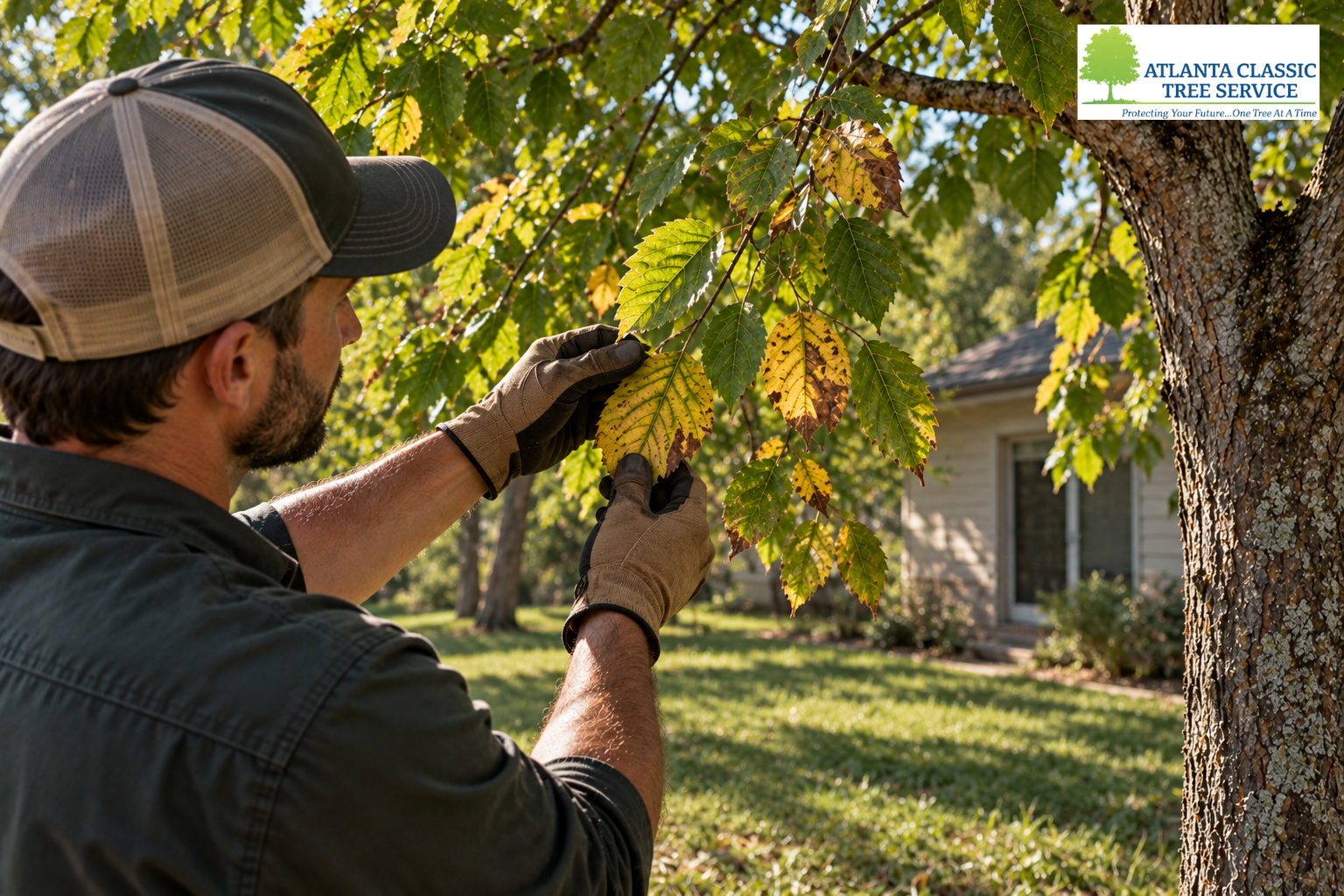
Even strong trees can run into issues after lightning, drought, or repeated storm damage. Internal decay might not be visible from the outside, but it can weaken the tree significantly. If decay is advanced, cabling or bracing might not be enough, so a professional inspection is crucial before deciding what to do.
If you're already thinking about a broader safety plan, it helps to compare support options with other services like tree removal and lightning protection. Sometimes one service saves the tree, while another protects your property. The best choice depends on the tree’s condition and risk level.
Signs Your Tree Might Need Cabling or Bracing
Splitting Unions and Multiple Stems
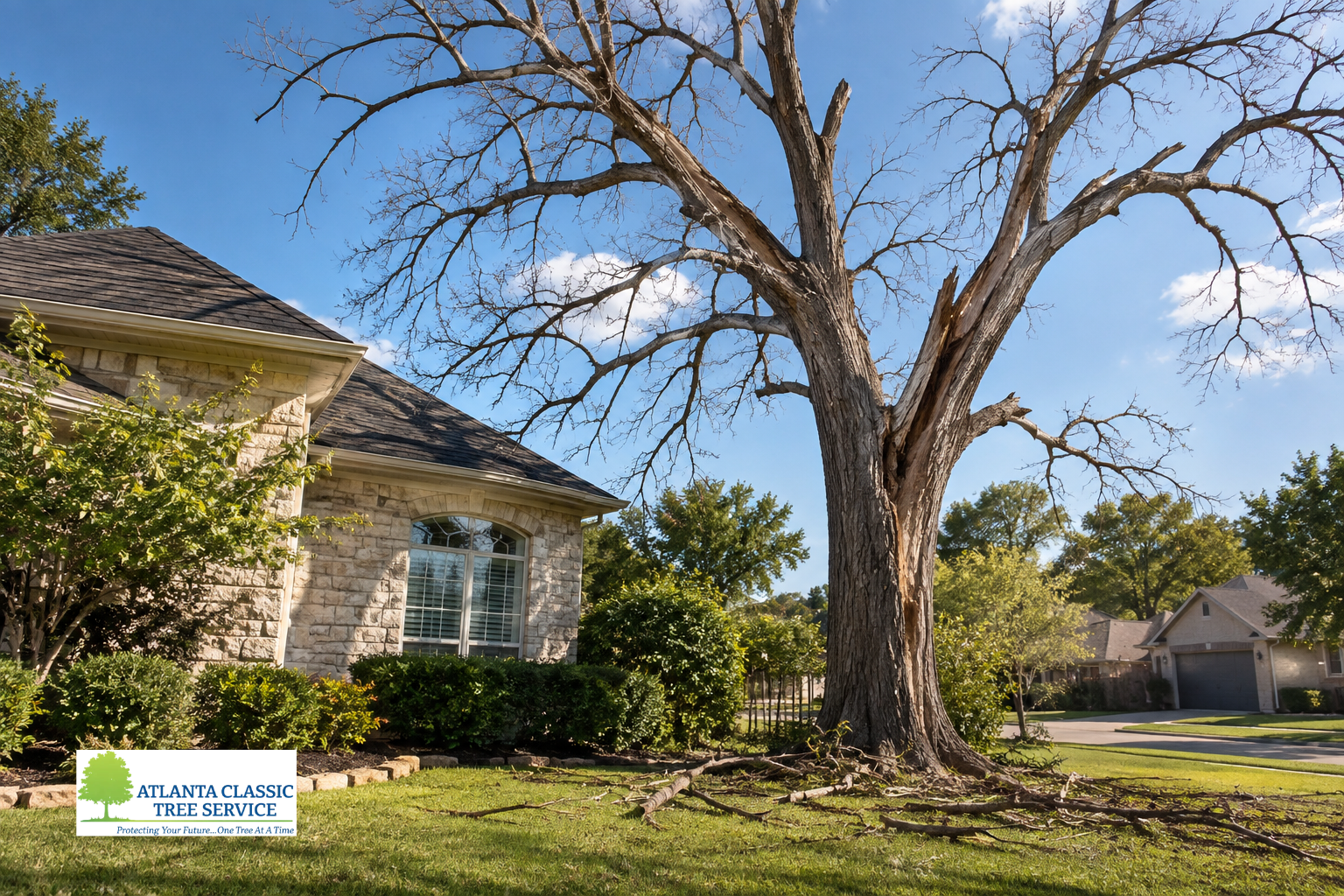
One of the biggest signs is a co-dominant stem, where two large stems grow from a single point and compete. These unions are usually weak because bark can get trapped between the stems, creating what's known as included bark. This defect weakens the tree and makes splitting more likely as it grows.
Cracks, visible separation, and bark ridges between stems are all good reasons to have a professional take a look. If the defect is high in the canopy, it might be hard to see from the ground, so a professional evaluation is important. Often, a support system can stabilize the tree while reducing stress on the weak spot.
Heavy Limbs Over Structures
Big limbs stretching over homes or garages need special attention. If they get too long or heavy, they might need support to prevent failure. A well-designed system can reduce sway and lower the chances of a limb breaking during a storm.
People often notice the issue when a branch droops or cracks. At that point, the tree might still be saved, but it needs a quick assessment. If you're already reading about structural concerns in our related article, Your Guide to Keeping Trees Safe and Supported in Alpharetta, GA, this guide expands on why support systems can be a smart next step.
How Arborists Decide on Support Systems
Starting with a Risk Assessment
A professional arborist will start by checking out the trunk, canopy, roots, and surrounding area. They look for cracks, decay, past storm damage, and branch attachments to see if the tree is dangerously leaning to one side. The question isn't just if the tree looks weak, but if it can be safely stabilized.
Experience is key here. Two trees with similar damage might need different solutions depending on species, age, and location. A support system that works for a mature oak might not be right for a brittle tree or one with major root issues.
Species and Growth Habits Matter
Some tree species respond better to cabling and bracing than others. Trees with strong wood and good health are often better candidates than those with decay or poor vitality. Growth habits also matter, as trees with broad canopies might need support sooner than those with a strong central leader.
When trees are stressed, arborists might also suggest other improvements like targeted fertilization or careful pruning. The goal is to improve the tree's overall health, not just add hardware and hope for the best. Support systems work best when they're part of a bigger plan.
The Real Benefits of Cabling and Bracing
Extending a Tree's Life
One of the biggest perks of cabling and bracing is keeping a tree around longer. Instead of cutting down a mature tree, a support system might let it stay for many more years. This can be especially important for shade trees or those that define your property.
Replacing a large tree takes time and money. Even a healthy new tree needs time to provide the same benefits. Preserving an existing tree is often the best choice when the tree can still be saved.
Reducing Risk of Property Damage
When a weak limb falls, it can cause a lot of damage—not just to the tree but to everything around it. Broken limbs can damage roofs, fences, and vehicles. Cabling and bracing don't eliminate all risks, but they do lower the chances of something catastrophic happening.
This is why homeowners who are thinking ahead take support systems seriously. A tree that's been cared for by a professional is usually easier to manage than one left to fail unexpectedly. If the tree can't be saved, then removal might be the better choice, but support can be a valuable middle ground.
Preserving the Environment
Mature trees do more than just look good. They cool areas, improve privacy, and provide habitat for wildlife. A tree that's supported instead of removed can keep providing these benefits while reducing danger.
That's why arboriculture focuses on saving trees when possible. Resources from institutions like the University of Georgia Extension often point out how good tree care benefits landscapes. Cabling and bracing support this by helping keep mature trees around longer.
What Professional Installation Involves
Planning Before Action
Pros don't just throw hardware on a tree. They think about the weight of the limbs, wind load, and how the tree will grow around the system over time. The setup should protect the tree, not just hold it up for now.
Often, an arborist will combine support with selective pruning to make the system more effective. Sometimes, pruning alone might solve the issue, while in other cases, a support system is needed to keep the tree standing.
Choosing the Right Hardware
Different support systems use different materials, and the wrong one can do more harm than good. Steel cables, dynamic systems, rods, and braces all serve different purposes. The choice depends on whether the goal is to limit movement, reinforce a split, or distribute load across multiple leaders.
Good installation also needs long-term maintenance. Hardware can loosen or shift as the tree grows, so follow-up checks are important. A support system isn't just a one-time thing; it's part of ongoing tree care.
How Cabling and Bracing Stack Up Against Other Options
Pruning Helps, But Isn't Always Enough
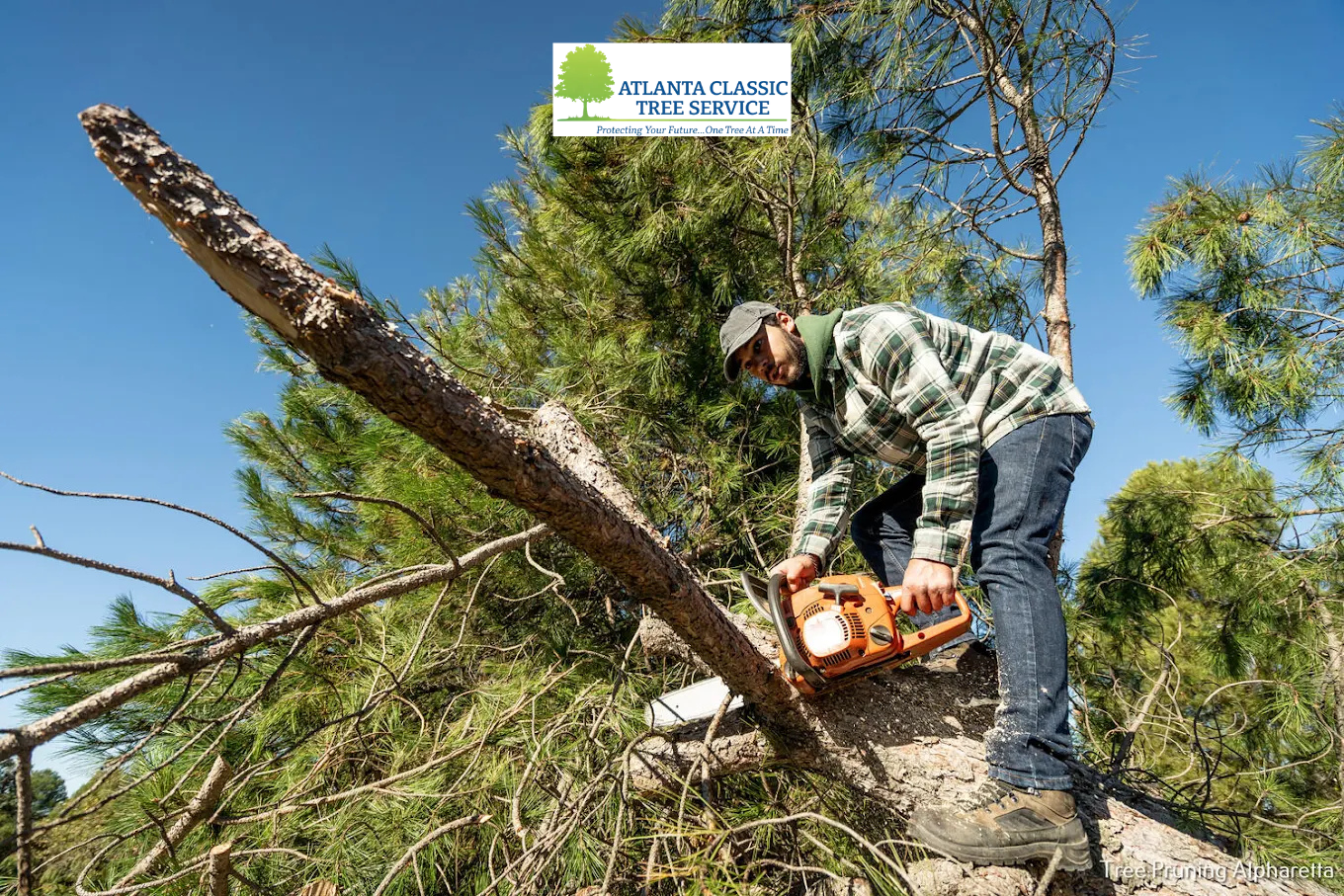
Pruning is a common way to improve a tree's structure by removing dead or overly long limbs. Often, smart pruning can reduce the need for support hardware. But if the structural problem is severe, pruning might not be enough.
That's why many arborists consider pruning and cabling together. Pruning removes unnecessary weight, and the cable or brace helps protect what's left. If you're interested in which branches might benefit most from trimming, our article on tree pruning warning signs is a helpful guide.
Sometimes Removal is the Best Option
Not every tree can or should be saved. If decay is extensive, roots are failing, or the tree is leaning too much, support hardware might only delay the inevitable. A professional inspection should always determine if the tree can really be saved before spending money on reinforcement.
Support systems are a tool to save trees, not a rescue plan for every situation. The more honestly a property owner evaluates risk, the better the outcome will be. Sometimes, the best decision is to remove the tree and protect the area from potential damage.
Maintenance After Installation
Regular Check-Ups Are Key
Once a cable or brace is in place, the job isn't over. Trees keep growing, and weather keeps testing them, so the system should be checked regularly to make sure it's still doing its job.
During inspections, an arborist might look for wear, tightened hardware, weight changes, or new cracks. These reviews matter because a system that worked well last year might need adjustments this season. Maintenance turns a good installation into a long-term solution.
Follow-Up Care Helps
Support systems do their best work when the rest of the tree is healthy. That often means proper watering during dry spells, limiting soil compaction, and using fertilization when needed. In some cases, a tree might benefit from stump grinding nearby if old roots or decayed stumps are affecting it.
For those managing bigger landscape concerns, it can help to think about drainage and site stability. Services like detention/retention pond maintenance can support healthier conditions by reducing standing water and erosion around stressed trees.
Common Mistakes People Make
Waiting Too Long
One big mistake is waiting until after a tree has a major crack or split. By then, it might be too late for cabling or bracing to help. Early inspection is way more effective because support systems work best before things get bad.
Another issue is thinking a tree is safe just because it still has leaves or new growth. Health and structure aren't the same. A leafy tree can still fail if its attachment points are weak.
Using the Wrong Hardware or Trying DIY
Another mistake is trying to install support equipment without the right training. Improper drilling or poor cable placement can damage the tree and create hidden weaknesses. Worse, a failed DIY system can give false confidence when the tree is still unsafe.
Professional arborists use the right equipment and understand how trees respond over time. This expertise is why trained crews are the safest choice for high-stakes tree support. If you're comparing professional help with DIY, our article on professional tree care vs. DIY explains why this difference matters.
Why Professional Experience Counts
Managing Risks is Part of the Job
Tree support isn't just about technique; it's about managing risks. The arborist has to balance tree health, property safety, and cost. Experience really matters here. A bad decision can mean unnecessary removal or false security around a failing tree.
Atlanta Classic Tree Service has been serving property owners since 1987, and that kind of experience helps when evaluating complex concerns. The team’s ISA-certified arborists know how cabling, bracing, and other care strategies fit together. For those wanting reliable guidance, this expertise often makes the difference.
Local Conditions Matter
Wind, soil, storms, and surrounding structures all affect how a support system should be set up. That's why local knowledge matters when evaluating trees in Georgia. A solution that works in one area might not work the same way elsewhere.
For homeowners and property managers seeking help with tree care, it makes sense to work with a local team that understands the environment. If you need a broader overview of our services, check out our pruning, cabling and bracing, and lightning protection options as part of a complete tree management plan.
FAQs About Tree Cabling and Bracing
How Long Do Cables and Braces Last?
The lifespan of a support system depends on the materials used, how fast the tree grows, and how well it's maintained. Some systems last for years, while others need updates or replacements sooner. Regular inspections are essential because the tree's needs can change over time.
Can Cabling and Bracing Save Every Weak Tree?
No. These systems work only when the tree still has enough structural integrity. If decay or root failure is too advanced, removal might be the safer option. A qualified arborist can determine whether support is sensible or another approach is better.
Will Support Hardware Hurt the Tree?
When installed correctly, cabling and bracing aim to minimize harm and save trees. However, poor installation or lack of maintenance can cause damage. That's why professional evaluation and follow-up care are so important.
Final Thoughts: Save What Can Be Saved
Tree cabling and bracing can be an effective way to keep a tree without ignoring the risks of structural weakness. When a tree has a weak spot, a professional system can reduce stress and help it stay in place longer. It's not the right answer for every tree, but for the right one, it can be a practical and cost-effective solution.
If you're unsure whether a tree should be supported, pruned, or removed, the next best step is a professional assessment. An arborist can identify the issue, explain your options, and recommend the best safety solution. For trusted guidance and careful service, Atlanta Classic Tree Service is here to help you make confident decisions about your trees.
Ready to protect a tree before a small issue becomes a big problem? Contact Atlanta Classic Tree Service to schedule an expert evaluation and find out if cabling and bracing is the right choice for your yard.