Can That Weak Tree Be Saved? When Cabling & Bracing May Be Better Than Removal
Not every tree that seems a bit wobbly needs to come down. Sometimes, with the right approach, you can keep a cherished tree safe and healthy for a long time. This is why many people wonder if cabling and bracing could be the solution before deciding on removal.
Here's what you'll learn in this guide: how arborists assess structural weakness, when support systems are a smart choice, and when tree removal is the safer option. We'll also cover warning signs, benefits, limitations, and long-term planning to protect your property. If you're weighing your options, our cabling & bracing services might be just what you need for trees that still have life left in them.
If you're curious about overall tree health and seasonal care, check out our article on how tree pruning encourages healthier growth. The right cuts at the right time can reduce future stress on limbs and trunks.
What Makes a Tree “Weak” in the First Place?
Structural problems versus surface symptoms
There are many reasons a tree might look weak, but it doesn't always mean it's a goner. Some just need a bit of pruning, while others might have deeper issues like poor branch attachment or an old storm injury. Things like leaf drop or a slight lean can be worrying, but they don't always tell the whole story.
The International Society of Arboriculture suggests focusing on structure and site conditions rather than looks alone. That's why a professional inspection is so important. A tree that seems unstable after a storm might be just fine if the roots and main limbs are intact.
Common causes of weakness
Trees can become unstable for lots of reasons. Think co-dominant stems, decay, compacted soil, root disturbance from construction, lightning, or storm stress. Sometimes these problems take years to show; other times, one bad storm can reveal a hidden issue.
Trees close to homes or driveways are particularly at risk because the site itself can add stress. If the roots are disturbed or the canopy gets too heavy on one side, the risk of failure goes up. In these cases, a tailored support plan might give the tree a fighting chance.
When Cabling & Bracing Can Be a Smart Alternative
Cases where support systems make sense
Cabling and bracing are usually worth considering when a tree has a structural weakness but still has enough healthy wood to justify saving. This often includes trees with split trunks or heavy limbs that could fail under stress. Instead of letting the tree struggle alone, these systems help distribute the weight.
Support can also be useful for older trees that add special value to a landscape. Here, it's not just about survival but also about preserving ecological, aesthetic, or historical significance. This is especially true for large shade trees where removal would significantly change the property.
How cabling and bracing work
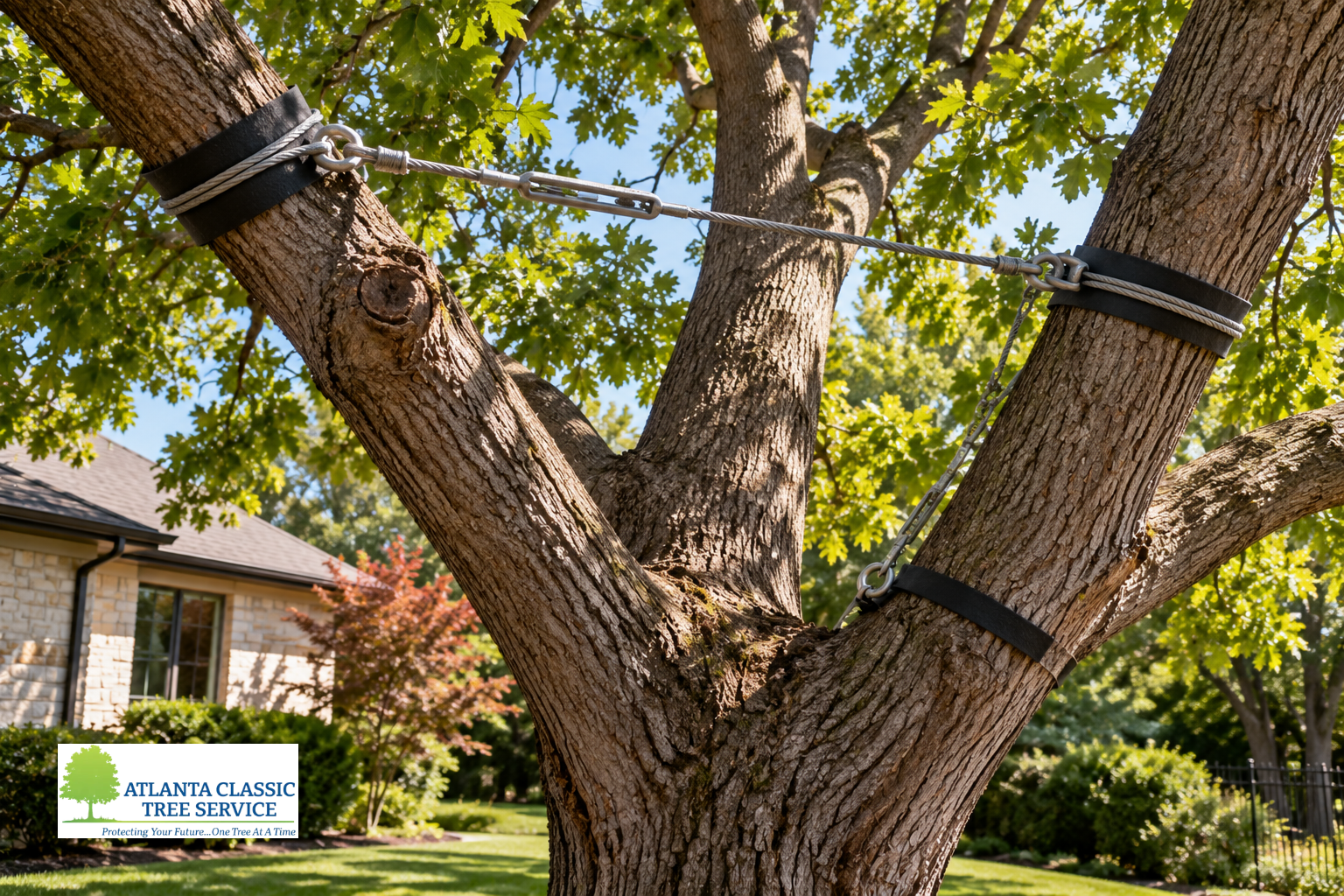
Cabling uses strong hardware installed high in the canopy to minimize movement between major branches. Bracing involves using rods to stabilize weak spots and reduce the risk of splits. Both methods aim to control movement without stopping it completely since trees need some sway to stay strong.
Good support work almost always goes hand-in-hand with selective pruning. Removing excess weight can lessen the load on weak limbs, while the support system takes care of the rest. This combo often saves trees that neither pruning nor hardware alone could.
In the Metro Atlanta area, experience matters. Atlanta Classic Tree Service has been supporting challenging trees for decades, and our pruning services are often a key part of the solution before any support system is put in place.
Warning Signs That Tell You a Tree Needs Evaluation
Visible cracks, splits, and seams
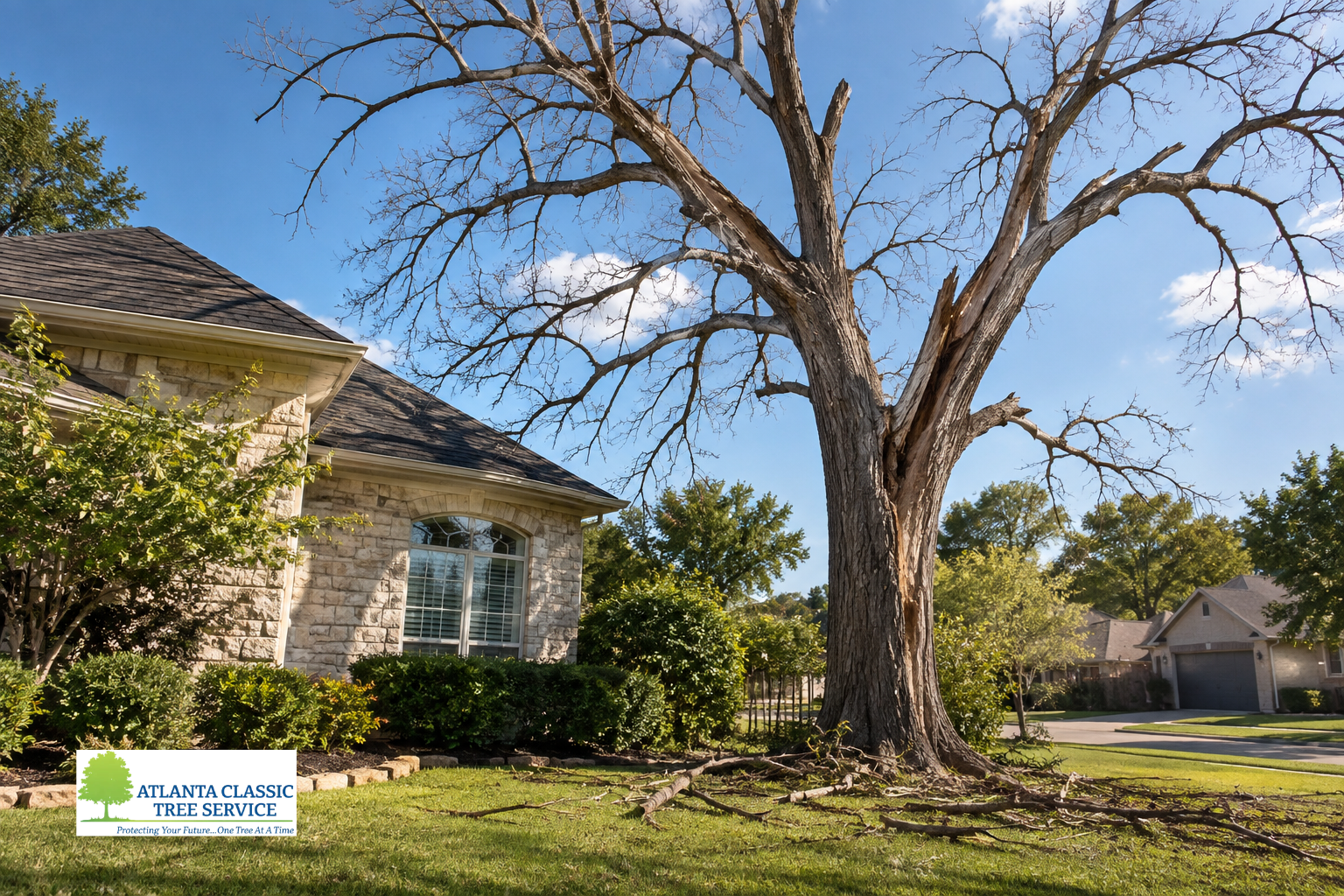
A major crack in the trunk or a split where limbs meet is a big red flag. These issues suggest the tree's structural integrity is compromised. While not every crack means the tree will fall immediately, it does mean it needs a quick evaluation to prevent further damage.
These cracks often appear after storms, heavy rain, or ice. In some cases, they're hidden by bark until the damage becomes obvious. If you notice fresh separation or bark lifting, it’s a good idea to have an ISA-certified arborist take a look.
Leaning, soil movement, and root issues
A new lean is much more worrying than a tree that's always been at an angle. When a lean comes with heaving soil or exposed roots, the tree's anchoring system might be compromised.
The U.S. Forest Service notes that tree stability heavily relies on root structure and soil conditions. If a tree has suffered from construction or repeated flooding, its roots might not be able to hold it up anymore.
Deadwood, canopy imbalance, and repeated failure
Large dead limbs can indicate stress or decay. A lopsided canopy might also create excessive leverage on one side. These issues don't always mean removal is necessary, but they do require a good diagnosis.
If a tree keeps dropping branches, its structure might be overloaded or poorly formed. In those scenarios, cabling, bracing, and weight reduction might help—if the tree still has enough sound wood to support these measures.
How Arborists Decide Between Saving and Removing a Tree
Risk assessment is more than a visual check.
A real tree risk assessment considers the whole picture: species, age, trunk condition, root health, past injury, and site exposure. A tree over a patio or next to a home is riskier than one in an open field because of the potential consequences.
Arborists look for signs like decay pockets and stress cracks. They also assess whether a defect is stable or getting worse. A tree with a minor weakness that's been stable for years might be a good candidate for support, while a rapidly declining tree usually isn't.
When removal is the safer call
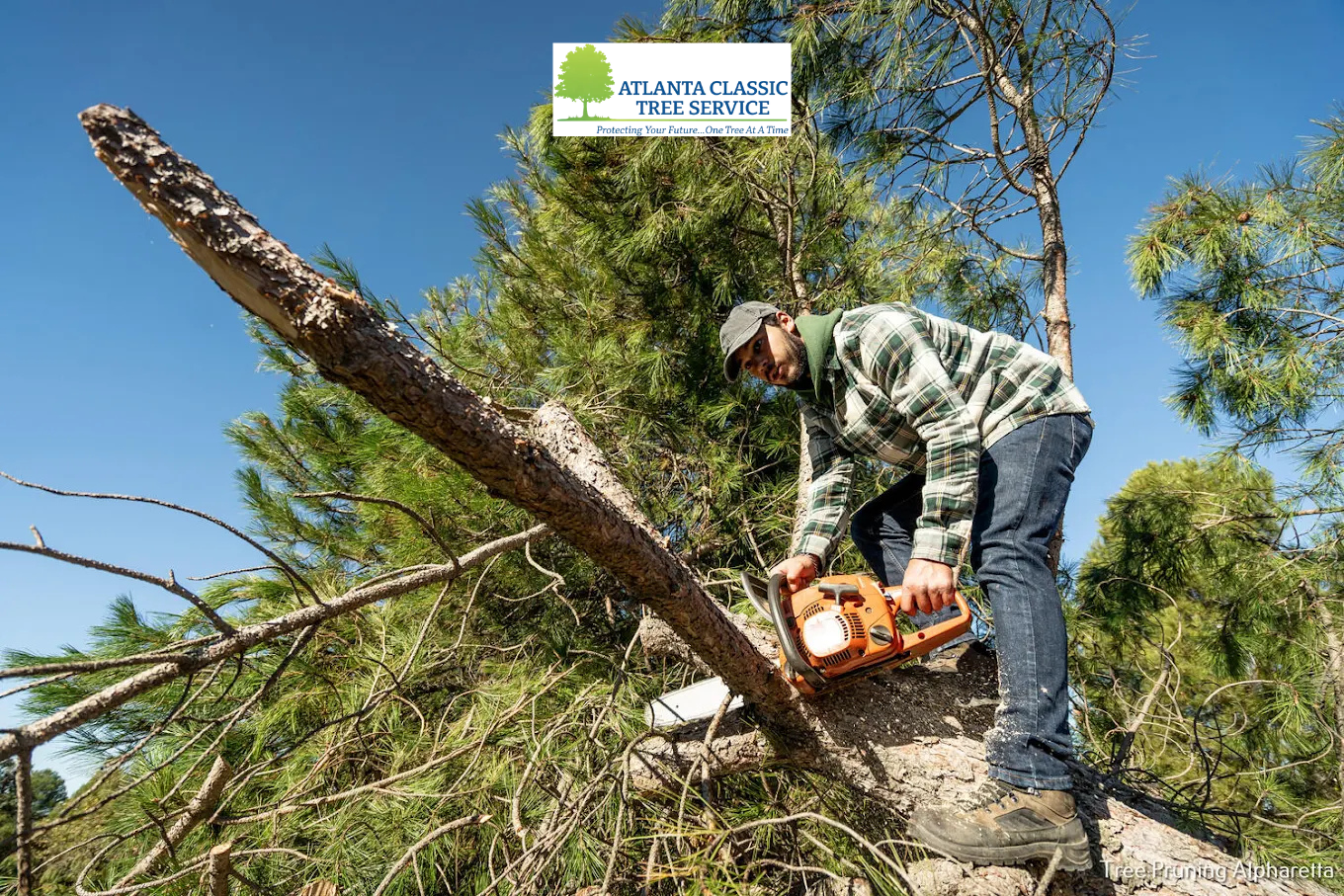
Sometimes, removal is the best choice. Extensive decay, compromised roots, or a weak trunk can't be fixed with hardware. In these cases, removal protects people and property.
Check out our guide to knowing when it’s time to let go of a tree for more signs. When a tree can't safely stand long-term, removal is often the smartest investment.
Why professional judgment matters
Two trees can show the same symptoms but need different solutions. One might need a light reduction and cabling, while the other needs immediate removal. That's why guessing can be risky. Arborists use training, experience, and tools to make decisions based on the structure rather than just appearance.
A site visit is often more reliable than a photo. A strong-looking trunk might conceal decay, while a bent limb might be flexible, not failing. Proper diagnosis prevents unnecessary removals and dangerous delays.
The Benefits of Cabling & Bracing for the Right Tree
Preserving mature canopy value
Large, mature trees offer shade, curb appeal, and wildlife habitat. Losing one can quickly change a property, and replacements take years to catch up. Cabling and bracing can preserve a mature canopy when the tree is otherwise healthy.
There's also a financial aspect. Removing a large tree can be pricey, and replacing it with a smaller one doesn't bring back the same benefits immediately. When support systems are suitable, they can extend the tree's life while maintaining your yard's character.
Reducing failure risk during storms
Support systems help minimize excessive movement during storms. They don't make a tree invincible, but they can prevent weak limbs from breaking. This is crucial in Georgia, where storms can appear suddenly.
Combined with pruning, cabling can be proactive rather than reactive. Owners who've experienced branch failure often appreciate the peace of mind from addressing a weakness before the next big storm.
Supporting long-term tree management plans
Cabling and bracing aren't set-and-forget solutions. They work best as part of a broader tree care plan that includes regular inspection and maintenance. If the tree responds well, the system might last for years.
That's why our fertilization services are sometimes recommended alongside structural support. A stressed tree might benefit from better root-zone nutrition, especially if soil conditions are poor.
Limits, Risks, and Maintenance of Support Systems
Support hardware still needs inspection.
One common mistake is assuming a cabling system lasts forever. Hardware can loosen or wear out as the tree grows. Regular inspections are essential, especially after storms or noticeable changes in the canopy.
As the tree matures, support points might need adjustments. If one side grows faster, the original system might not provide the right support anymore. Ongoing monitoring ensures the tree remains safe, not just supported.
Not every weak tree is a candidate
Some trees are too compromised for cabling and bracing. Severe decay, hollowing, or an unstable base can make support unreliable. In these cases, trying to save the tree might create false confidence and higher risk.
Remember, support systems don't reverse disease or revive dead tissue. They're structural tools, not cures. If a tree's health is declining fast, preservation might only delay the inevitable while adding cost and liability.
Hardware installation must be precise.
Incorrectly placed cables or braces can cause damage. Poor attachment points might hurt the tree, and hardware that's too tight can restrict needed movement. Professional installation reduces these risks by matching the system to the species and defect.
Success with cabling and bracing depends on both diagnosis and workmanship. This is where a company with experience, safety training, and adherence to standards can make a difference.
What a Professional Evaluation Looks Like
Step one: visual inspection and history
A professional visit usually starts with a ground-level inspection. The arborist checks the trunk, roots, branches, and nearby structures. They'll also ask about past storms, construction, and changes in the tree.
This history helps determine whether the problem is longstanding or new. A tree that's always leaned might be stable, while one that shifted after a storm needs attention. The more context the arborist has, the better the decision will be.
Step two: determine support versus removal
After identifying the defect, the arborist weighs options. If the tree can safely respond to support, the recommendation might include both cabling and pruning. If it's too far gone, they might suggest removal instead.
For a clean finish after removal, our stump grinding services can help restore usable space and reduce the risk of pests or unwanted regrowth.
Step three: create a maintenance plan
The final part is follow-up. If the tree is preserved, it should be checked again to ensure the hardware is still effective. If removed, the arborist might discuss replacements or future planting options.
This plan-based approach focuses on long-term safety and property health rather than just a quick fix.
Real-World Scenarios Where Support May Beat Removal
Split co-dominant stem on a valuable shade tree
Think of a big shade tree with two main trunks splitting from the top. One union starts to separate, but the rest of the tree is healthy. In this case, cabling and bracing might reduce movement enough to save the tree, especially if pruning can lighten the load.
However, if the split extends into decay or one stem starts to fail, it might not be a good candidate. The key isn't just the appearance but the sound wood remaining and the tree's overall health.
Storm-damaged limb with healthy surrounding structure
After a storm, a large limb might crack but stay attached. If the rest of the tree is stable, the damaged limb can be removed or reduced, and support added for protection. This can preserve a mature tree after isolated damage.
In these cases, timing matters. The faster a tree is assessed after damage, the more options are available. Waiting too long can let decay spread, reducing the chance of successful preservation.
Historic or landmark trees
Some trees hold value beyond their physical presence. They might be part of a historic site or serve as a neighborhood landmark. Arborists may work to save these trees if it's safe and responsible to do so.
These trees often need detailed management, including support and regular care tailored to their age and significance. Preservation is possible, but only if the tree's condition allows it.
Frequently Asked Questions About Cabling & Bracing
Is cabling and bracing a permanent solution?
No, they're part of ongoing care, not a permanent fix. They can extend a tree's life and improve safety, but they need inspection and sometimes adjustment. The goal is to manage risk while preserving the tree as long as it's a good candidate.
Will support systems hurt the tree?
When installed correctly, cabling and bracing help without causing harm. Poor installation can create wounds or restrict growth, which is why professional judgment and proper materials matter.
How do I know if my tree is worth saving?
The most reliable answer comes from a professional assessment. A tree with moderate weakness and healthy roots might be a good candidate. One with widespread decay or major root failure usually isn't.
Should I combine cabling with pruning?
Often, yes. Pruning reduces weight and wind resistance, making the support system more effective. It also balances the canopy, lowering stress on weak branches.
Why Atlanta Property Owners Trust Professional Tree Care
Experience, safety, and local knowledge
Tree support decisions aren't one-size-fits-all. They depend on species, age, weather exposure, and site conditions. Atlanta Classic Tree Service has been helping property owners since 1987, offering practical recommendations instead of generic answers.
We work with ISA-certified arborists and follow guidelines from groups like the Tree Care Industry Association. This commitment to safety and quality is crucial when a tree is near a home or business.
Serving the bigger picture of property health
Preserving one tree can also protect the surrounding area. A large tree can influence drainage and soil conditions. The right support choice helps maintain balance while avoiding unnecessary removal.
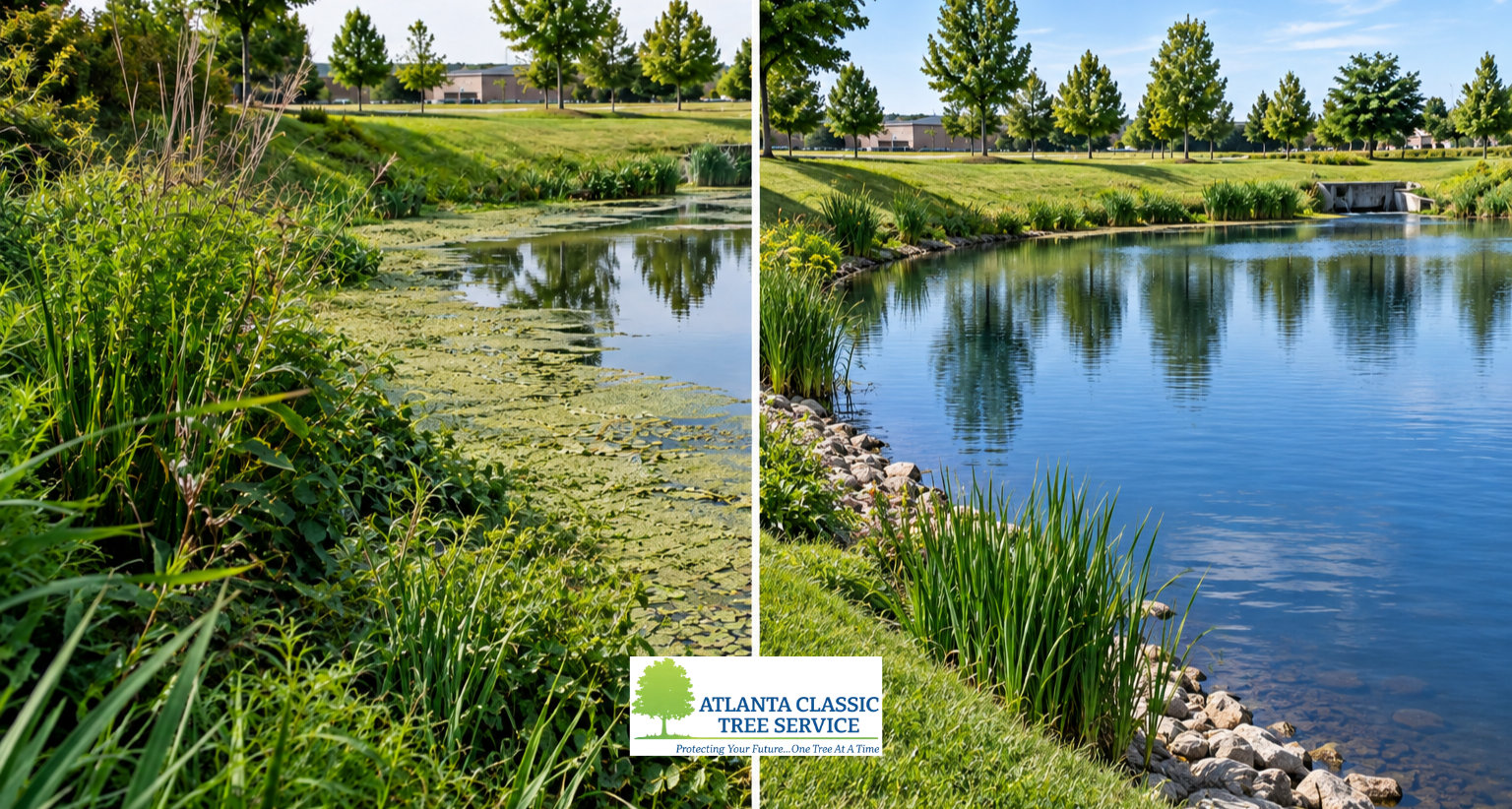
If you need a broader property strategy, our detention and retention pond maintenance services can support healthier drainage and site stability where stormwater impacts trees and nearby land. A well-managed property is often safer and more resilient overall.
Final Thoughts: Save It When You Can, Remove It When You Must
A weak tree isn't always doomed. Cabling and bracing can preserve a valuable tree, lower failure risk, and help it thrive when done right. Honest assessment is the key, not wishful thinking.
If the tree has healthy structure, good root support, and a path to long-term stability, support might be the better choice. If not, removal is the safer option. Either way, a professional evaluation, not guesswork, should guide the decision.
If you're worried about a tree on your property, Atlanta Classic Tree Service can help you find the safest next step. Call (770) 497-1941 or reach out to schedule an assessment. For more about our tree care approach in Alpharetta, visit our main site at Atlanta Classic Tree Service and let us help you decide if your tree can be saved.