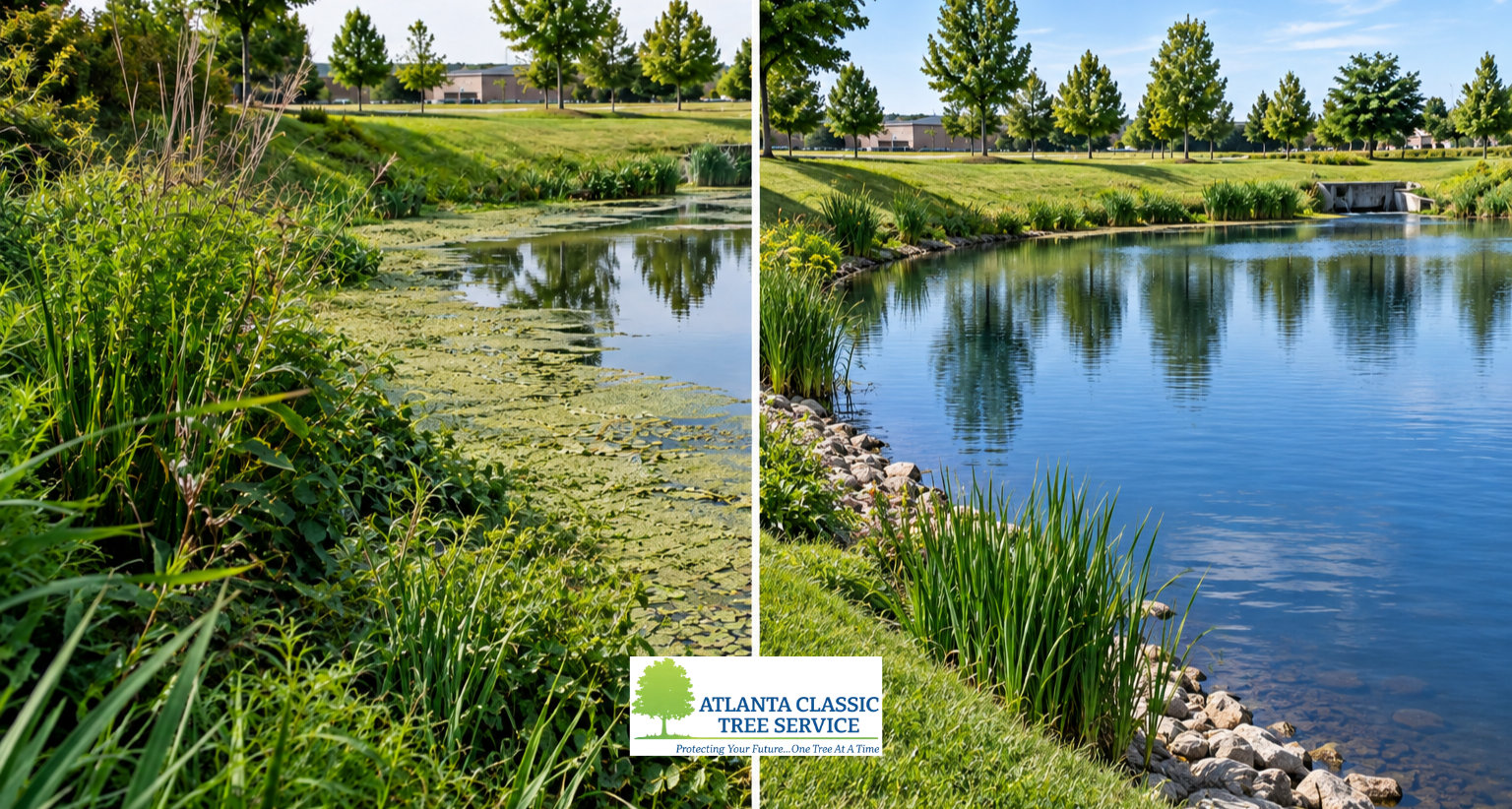
Retention ponds do a lot of important work quietly; they manage runoff, protect properties, and keep stormwater flowing smoothly. But if they’re not taken care of, they can quickly turn from helpful to harmful. Overgrown vegetation, sediment buildup, or eroding banks can make your pond more of a hassle than a helper.
Have you noticed tall weeds, thick brush, or areas that look more like a swamp than a pond? It might be time to ask: is it time for a pro to step in? Often, the answer is yes. Let's dive into five common signs that your pond could use some attention. Understanding these signs helps you tackle small problems before they turn into costly repairs. If you're also managing the surrounding area, services like detention and retention pond maintenance, stump grinding, and pruning can help keep everything running smoothly.
Stormwater ponds aren't just about looks. According to the U.S. Environmental Protection Agency, these systems help cut down on flooding and pollution by controlling runoff before it reaches waterways. A neglected pond can mess with drainage, water quality, and even compliance, piling up the costs.
Why Keeping Your Pond in Shape Matters
Stormwater Control Relies on Good Capacity
Retention ponds are supposed to temporarily hold water, letting it settle or filter out safely. But over time, sediment, leaves, and other debris can pile up, reducing their capacity. When that happens, the pond might overflow during heavy rain, making regular maintenance essential.
Overgrowth Can Hide Bigger Problems
Thick vegetation might seem harmless, but it often covers up clogged inlets, eroded banks, or drainage issues. Tall weeds and volunteer trees can make inspections tough, and invasive plants can push out the good stuff. Sometimes, roots can even weaken structures or block maintenance equipment. If nearby trees are causing trouble, pairing pond care with tree removal or cabling & bracing might be necessary.
Ignoring It Now Means Bigger Bills Later
Skipping maintenance adds up. A pond that just needs some vegetation control today might need a full overhaul if left for years. Bank failure, erosion, and clogged drains can lead to costly repairs. That’s why many property managers see pond maintenance as a smart preventative move, not just a cosmetic fix.
Sign 1: Vegetation is Taking Over the Edges
Grass is Losing to Brush and Invasive Plants
The first sign of trouble? Out-of-control vegetation around the edges. If grass has turned into thick brush, tall reeds, or woody growth, it's time for professional help. These plants can hide issues and make inspections harder, while erosion might already be setting in.
Overgrowth Blocks Access and Raises Safety Issues
Maintenance crews need safe access for inspections. Dense vegetation can make even simple checks difficult. It can also hide holes or slippery spots, posing risks for anyone trying to get around the site. A professional plan usually includes clearing vegetation and setting up mowing schedules to keep the pond accessible and functional.
Tree Seedlings and Saplings Can Spell Trouble
Small trees might look harmless, but saplings on pond slopes can cause long-term structural issues. Roots can destabilize the soil, and fallen limbs can add debris. If trees are popping up, it might mean the pond has been neglected long enough for woody growth to take over. Pruning and targeted removal might be needed to restore the area.
Sign 2: Standing Water Lingers After Rain
Water Should Drain in a Reasonable Time
Retention ponds aren't supposed to stay full. Some water is normal after a storm, but if it sticks around too long, there might be a drainage problem. Stagnant water could mean the pond is clogged with sediment or overgrown with plants, or the outlet structure is blocked.
Poor Drainage Attracts Mosquitoes and Odors
Lingering water is a breeding ground for mosquitoes and can start to smell as organic material decomposes. Stagnant water often leads to algae growth and attracts unwanted wildlife, affecting quality of life for nearby residents or customers. For commercial sites, it can hurt curb appeal and lead to complaints.
Persistent Ponding Might Mean Sediment Buildup
Many are surprised to learn that sediment is a common reason a pond stops draining well. Soil, runoff, and organic matter build up at the bottom, reducing depth. The U.S. Geological Survey explains that sediment movement is natural, but in managed ponds, it needs to be controlled to maintain capacity and drainage performance. Professional dredging might be needed if sediment starts taking over.
Sign 3: Sediment and Debris Are Piling Up
The Pond Looks Shallower Than Before
If the water level seems unusually high or large parts look filled in, sediment buildup is likely at play. A shallower pond holds less stormwater and can overflow more easily during heavy rain. Even if it seems to work, reduced depth is a warning sign that it's losing its designed capacity.
Leaves, Trash, and Organic Material Are Collecting
Retention ponds often catch runoff from landscaped areas and streets, which means leaves, mulch, and litter gather near inlets. Without regular cleanup, these materials decompose, leading to silt, algae, and odors. Buildup can also clog drains, making maintenance costlier later.
Standing Sediment Chokes Habitat and Drainage
As sediment rises, it buries aquatic habitats and creates shallow zones where weeds thrive. This speeds up overgrowth and complicates management. A professional crew will assess if the pond needs surface cleanup, vegetation control, or serious sediment removal. For large sites, broader landscape cleanup, like wood shavings delivery, might be needed for erosion control.
Sign 4: Erosion Is Hitting the Banks or Outlet Structures
Soil Loss Leads to More Damage
Erosion is a big red flag for pond issues. Washed-out soil, exposed roots, or undercut banks mean stormwater is moving too aggressively or the groundcover isn’t holding the slope. Once erosion starts, it tends to spread, especially with more rain. If left alone, it can shorten the pond's life.
Outflow Structures Must Stay Clear and Stable
Spillways, pipes, and outlet structures need to stay unobstructed to work properly. If vegetation, sediment, or soil blocks these, the pond can back up or overflow during storms. Even small obstructions can cause drainage issues. Professional maintenance includes checking these structures and clearing blockages.
Erosion Can Damage Nearby Landscaping and Hardscapes
When water isn’t guided properly, it often ends up where it shouldn’t, damaging turf, mulch beds, pavement, or soil near fences. If the pond is near trees or slopes, erosion might destabilize them, requiring broader intervention. Solutions might include bank stabilization or tree work.
Sign 5: Wildlife, Odors, or Algae Are Becoming a Problem
Algae Blooms Mean Nutrient Imbalance
Too much algae usually means too many nutrients are getting into the pond. Green scum or floating mats show the pond is overloaded with organic matter. While not every bloom is an emergency, recurring blooms mean the pond needs better maintenance and maybe a reduction in upstream debris.
Unusual Wildlife Activity Can Signal Stagnant Conditions
Increased nuisance wildlife might point to poor water circulation or excessive vegetation. Mosquitoes are common where water lingers too long. For commercial properties, this can become a customer service issue.
Odors Usually Mean Decomposition
Bad smells often come from anaerobic decomposition, happening when decaying vegetation sits in oxygen-poor water. This can occur if the pond is overgrown, stagnant, or packed with sediment. Odor problems might also reveal hidden drainage issues.
How Professional Maintenance Can Help
Inspections Find the Real Problem
The first step is a detailed inspection. A trained crew looks for overgrowth, sediment buildup, and blocked inlets or erosion. This is important because the visible symptom isn’t always the real cause. For instance, a pond that looks overgrown might actually have a clogged outlet or years of sediment reducing its capacity.
Vegetation Management Restores Function
After identifying problem areas, maintenance can include mowing, clearing brush, and removing invasive plants. The goal is to restore visibility and keep access open for future inspections. In some settings, surrounding trees might need attention if they’re dropping debris or shading out growth. Professional pruning can support the health of the entire area.
Sediment Removal and Repairs Extend Pond Life
If the pond has lost depth, dredging or sediment removal might be necessary. This can be paired with grading work, erosion control, and restoring outlet structures or banks. In more complex cases, stabilization, cleanup after storms, or tree-related work near the pond might be part of the plan. If large trees threaten the edge, tree removal might be the safest prevention method.
Steps to Take Before Calling for Help
Document What You See
Before getting professional help, take photos of the pond from different angles. Note any standing water, sediment, overgrowth, or damage. This helps determine if the issue is mainly cosmetic or functional and gives the maintenance team a better idea of what’s needed.
Check If the Issue Is Recurring
One off problem after a storm isn’t the same as a recurring issue. If the pond has been getting shallower or greener over several seasons, it’s likely a systemic problem. Recurring issues usually mean maintenance has been delayed too long, and a comprehensive plan is needed.
Review Local Responsibilities and Access Needs
In many areas, stormwater feature responsibility falls on property owners, HOAs, or management companies. It’s wise to review site plans, maintenance agreements, and any requirements before starting work. The EPA’s guidance on urban runoff is a good reminder that these systems are part of a larger network, not just isolated features. Understanding your responsibility can help prevent delays or compliance issues.
FAQs About Overgrown Retention Ponds
How Often Should a Retention Pond Be Maintained?
Most ponds benefit from regular inspections throughout the year, with maintenance more often if vegetation grows quickly or there’s heavy storm activity. At a minimum, plan for checks after major weather events and seasonal cleanup.
Can I Clear the Pond Myself?
Basic checks and light cleanup might be possible, but overgrown ponds often involve slopes, standing water, and drainage structures needing professional equipment. DIY work can disturb regulated features or create hazards. If there's significant sediment or bank instability, professional help is safer.
Do Overgrown Ponds Affect Curb Appeal and Property Value?
Yes, they do. A neglected pond can make a property look poorly managed, affecting first impressions and reducing the risk of visible drainage failure. For commercial and multi-family properties, it influences tenant satisfaction and asset value.
When to Schedule Professional Maintenance
Don’t Wait for a Flood or Complaint
If your pond shows more than one warning sign, scheduling maintenance now is smart. Waiting for a storm or complaint usually means the problem is more complicated. Early action is less disruptive and less costly.
Choose a Crew That Understands Trees and Stormwater
Pond care often overlaps with landscape and tree management. A skilled team handles vegetation control, access issues, sediment cleanup, and related hazards around the pond. Local knowledge matters, especially when pond issues involve overgrowth or unstable trees.
Protect Your Pond Before the Next Storm
At Atlanta Classic Tree Service, we help property owners spot problems early and address them with professional care. Whether a pond needs clearing, tree-related support, or a maintenance plan, the goal is the same: protect the site, restore function, and prevent damage. If your retention pond looks overgrown, now's the time to act. Contact us to schedule an assessment and take the first step toward a cleaner, safer drainage system.